
Anglican Church in Cambridge

Stained Glass Window

Double Gazebo

Rotorua Museum

Rotorua Museum

Lawn Bowling

Thermal Pool

Thermal Lake

St. Faith’s Church

St. Faith’s Church Interior

Etched Glass of Maori Christ

Maori Meeting House

A Shy Pukeko

Blue Lake

Green Lake

Dried Hot Mud

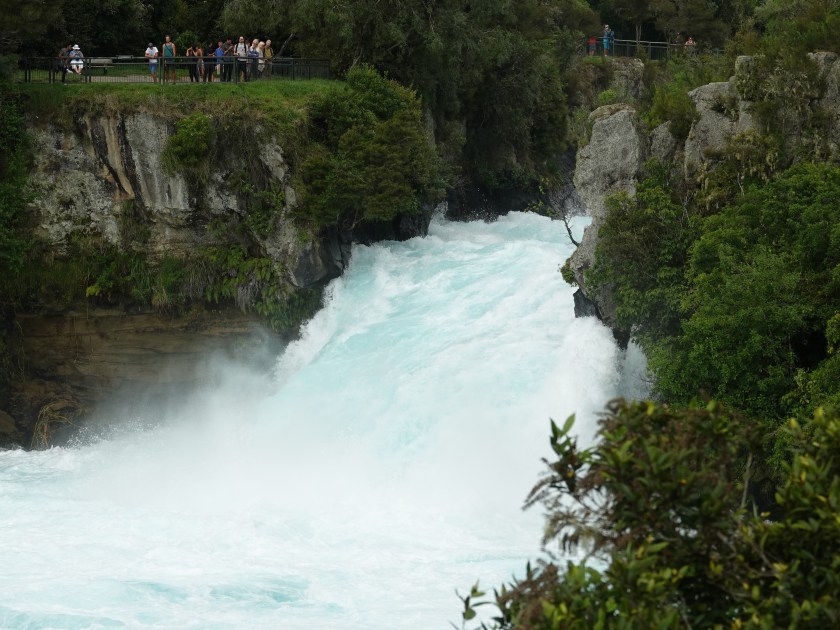
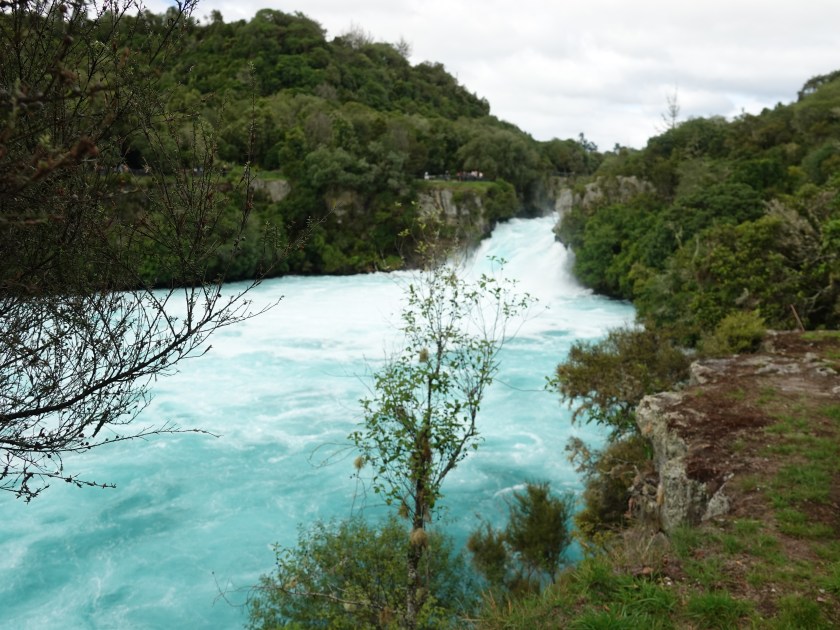
Waterfall

Paua Shells

Finally, a Picture of Herman!
This is Day 3 and our last day in Rotorua. Herman is off hiking while I’m taking full advantage of a rest day.
We left Hamilton on Monday, the 12th, stopped temporarily in Cambridge for a wonderful photo of a double decker gazebo, and visited a charming Anglican church. I’m surprised by the number of churches, which vie with Maori meeting houses almost everywhere you look.
On the way out of Cambridge, back on the narrow road to Rotorua, we encountered a line of stopped cars, backed up as far as we could see in front of us. With flashbacks of Los Angeles traffic in our minds, we stopped and waiting patiently for the road to clear, but then we saw cars turning around and knew that our GPS-led route was off the table. A person directing traffic said that there was a crash that would take 3-4 hours to clear, and we needed to drive to another town nearby, at which point there would be signs pointing us to Rotorua. Okay…basically, we ended up following all the other cars until we started seeing signs for Rotorua. However, our GPS was getting rather irritated with us, prompting us every half mile to turn around until she finally gave up out of pure exasperation.
Without any further drama, we made it to our destination and our new hotel, which I will admit is somewhat of a letdown after our more comfortable accommodation in Hamilton. The property is riddled with concrete poles, one of which Herman promptly backed into. Now, to be fair, Herman is an incredible driver (I mean, anyone who can drive fearlessly along the Amalfi Coast in Italy deserves recognition), but this was just not his day. Add to the scraped paint a missing hubcap, and we’re having a grand start to our 90-day car rental. I had hoped that we would return the car in June to the rental company, dirty but intact, unlike the car we rented 20 years ago that was so old and decrepit upon receipt in Auckland that pieces of it littered our route throughout both islands. When we dropped it off at the end of that trip, we thought we heard the sound of metal clanging, envisioning the poor vehicle abandoning all its external and possibly internal parts on the garage floor.
Rotorua is a big center for Maori culture and geothermal activity. Sadly, we don’t have any photos of Maori dances or a Hangi (a method of cooking food using heated rocks buried in a pit oven) as we experienced an evening at a Maori village during our last visit to New Zealand. I do highly recommend it, though. Also, tourism has caught up to New Zealand, so even visiting some of the major geothermal areas is very expensive. Fortunately, there are still plenty of things to do, and Herman got some great shots of a heated lake and birds, including a shy Pukeko.
We were so disappointed to discover that one of the most iconic buildings, the Rotorua Museum (Te Whare Taonga o Te Arawa) was closed due to earthquake upgrades that became necessary after recent earth movement activity across the country. Originally a bath house, the museum houses fine arts, photography, social history, and Taonga objects from the Maori culture. We were able to take advantage of a free walking tour of the property. I also learned a little bit about lawn bowling, as the area surrounding the building is government gardens with multiple uses for relaxation and recreation.
Apparently, Christian missionaries had a major impact in New Zealand during the 1800s. The St. Faith’s Church in Rotorua combines typical Christian architecture and stained glass windows with Maori carvings and a window with an etched figure of Christ wearing a Maori cloak. We were told that the chieftain at the time that the missionaries arrived directed his people to split between joining the Anglican and Catholic faiths. Across from the church is a Maori meeting house, though unfortunately, it was closed for a, well, um, meeting.
Yesterday (Wednesday), we visited the Blue and Green Lakes, both so inviting and peaceful. We also visited the Buried Village of Te Wairoa, a once thriving tourist town during the mid-1800s due to the nearby Pink and White Terraces (a series of naturally heated, thermal pools) on Lake Rotomahana. On June 10, 1886, Mt. Tarawera erupted, burying most of the village in hot ash and mud and destroying the terraces. You could see the dried mud up against what was left of some of the buildings, and I can only imagine how terrifying that must have been to see that coming toward you if you were trapped in your home! There was a waterfall on the property, bringing our total to three so far. For more of Herman’s photos, go to http://www.hermanator.net/NEW-ZEALAND-2018.
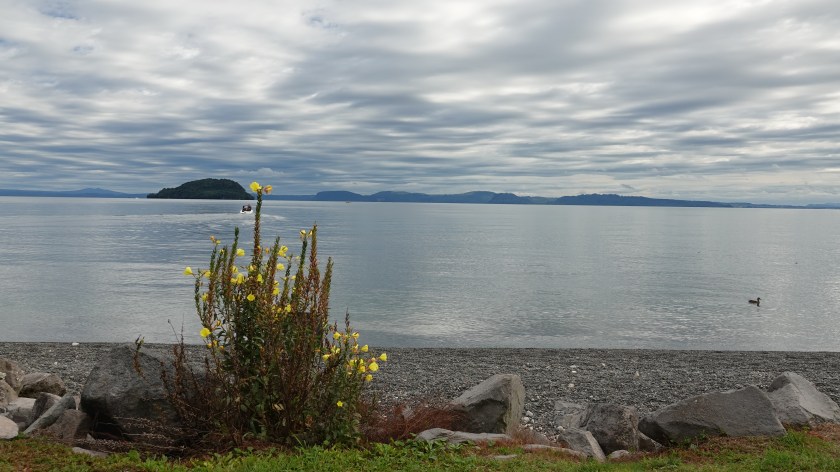
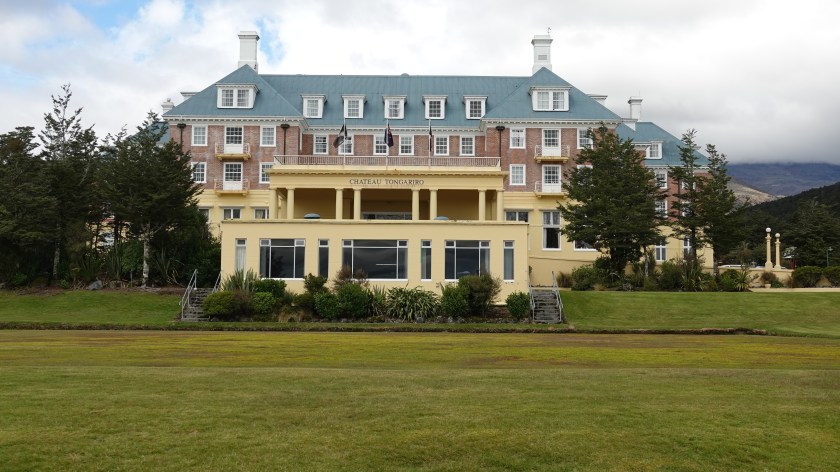
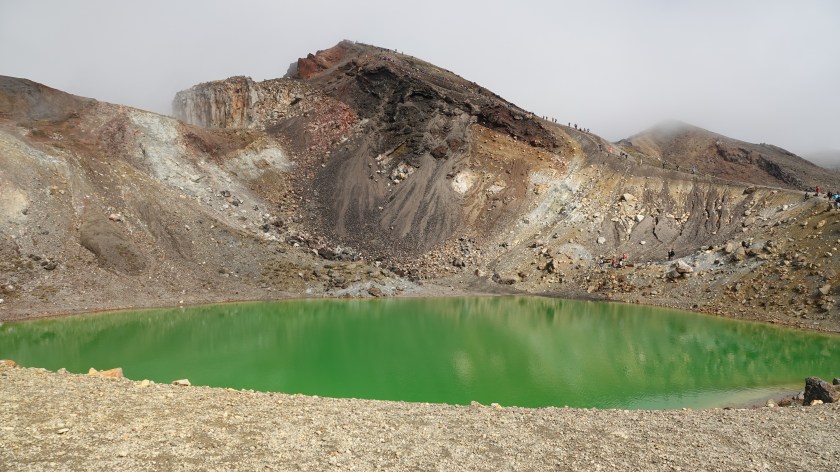
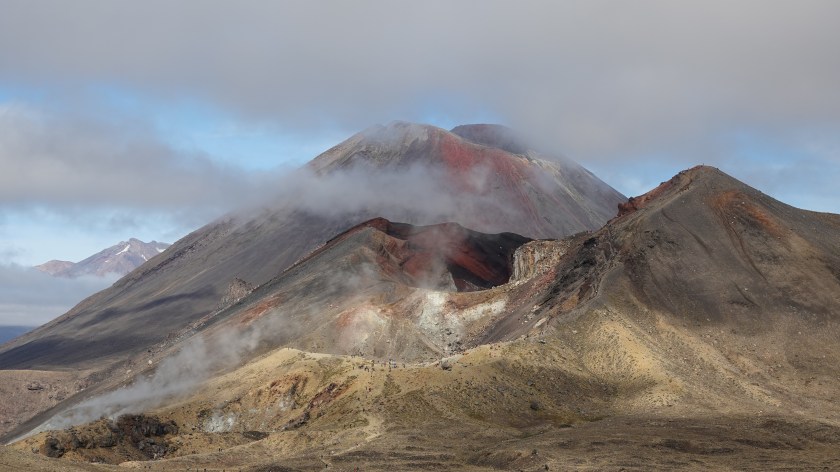
Tomorrow, we’re on our way to Lake Taupo for one night, so you probably will not hear from me again until we reach Tongariro National Park.






 Trambling