Windy Wellington


Wellington is both the political and cultural capital of New Zealand, and it certainly lives up to its windy reputation. Thank goodness, though, as it was quite humid while we were there, with showers in the early morning followed by sunny and/or cloudy afternoons. It’s also quite a walkable city, helped by the fact that our hotel was set in the business district, near all the museums. I’m sorry to report that we didn’t visit the Te Papa, the main NZ museum, but only because we saw it 20 years ago. While I’m sure it’s changed quite a bit, I did notice that some of the exhibits were still there, including an amazing artistic rendering of a Maori meeting house. If you go online, I’m sure you can see more images and learn about the collections.

I’ve not commented much on the Maori culture. It is truly a fascinating culture, and on our first trip 20 years ago, we attended a welcome/dance event, where a Maori representative greets you by pressing their nose to yours followed by a warrior show of force. I feel pretty sure that in reality, when the first Europeans showed up on these shores, that the display was in reverse. We also attended a Hangi, in which the meat and vegetables are roasted/smoked in an oven created by digging a hole in the ground, layering the wood for the fire, and placing a rack on top with the food, before covering the whole thing to let the fire and smoke create a fall-off-the-bone scrumptious lamb, beef or chicken along with corn and kumara (a sweet potato). The original Maori were from Eastern Polynesia, who settled in New Zealand sometime between 1250 and 1300. You might have seen photos of Maori with full facial tattoos (moko), which represent a person’s social standing and family history. Maori wood and stone carvings are of remarkable diversity. We’ve been told that if we buy any greenstone (a type of Jade), you should have it blessed before you leave the island. While I can only comment as a tourist, it seems that the Maori have made great strides in reclaiming their place in the country, including land ownership, TV station(s) and government. Their language is on equal footing with English at all the museums and tourist attractions.

While we enjoyed viewing the main outlook at the top of a hill and walking through a botanical garden with a fantastic rose garden, we also took a scenic drive just outside the city, where we decided that we could happily take up residence, if New Zealand would have us. Sadly, immigration for anyone over 56 isn’t possible unless you have about $5 million dollars or are willing to start a business. If you’re under 56 and in good health with marketable skills, I get the impression that you’ll be welcomed with open arms.

The biggest highlight of our Wellington trip was a tour of Weta Workshop, which produced the sets, costumes, armor, weapons, creatures and miniatures for “Lord of the Rings,” “The Hobbit,” and many more Hollywood films you might recognize. The people who work there are truly creative geniuses.

Don’t forget to check in on Herman’s day-by-day photos: http://www.hermanator.net/NEW-ZEALAND-2018!

Middle Earth

DSC01306.JPG
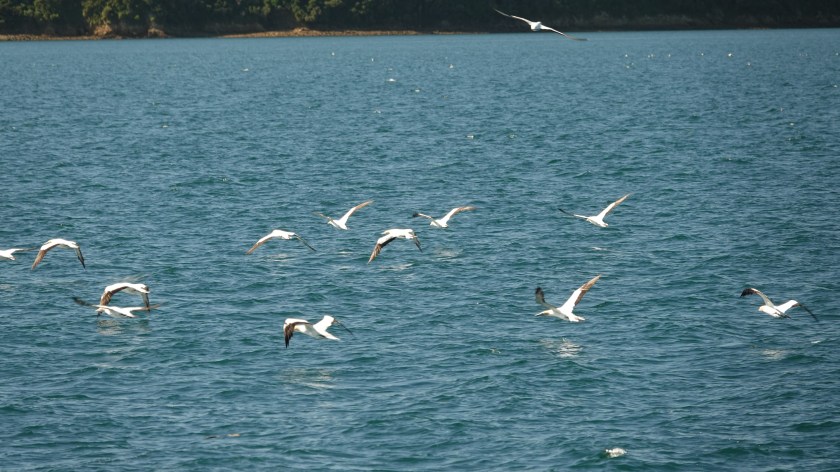
Gannets in Flight
DSC01334.JPG
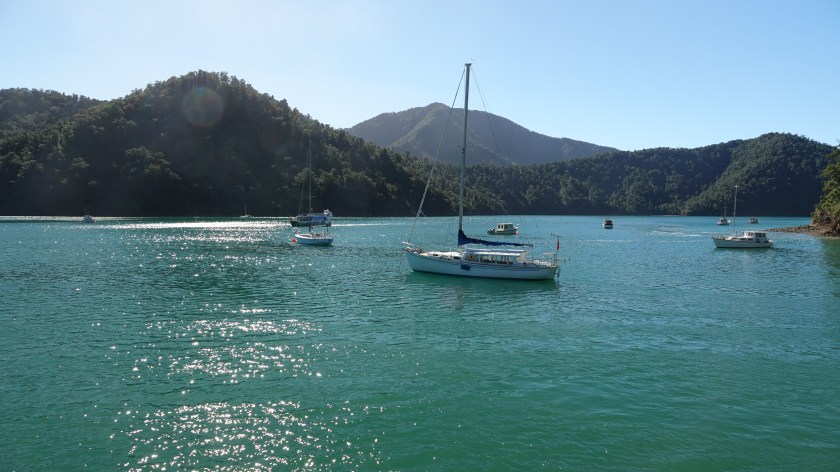
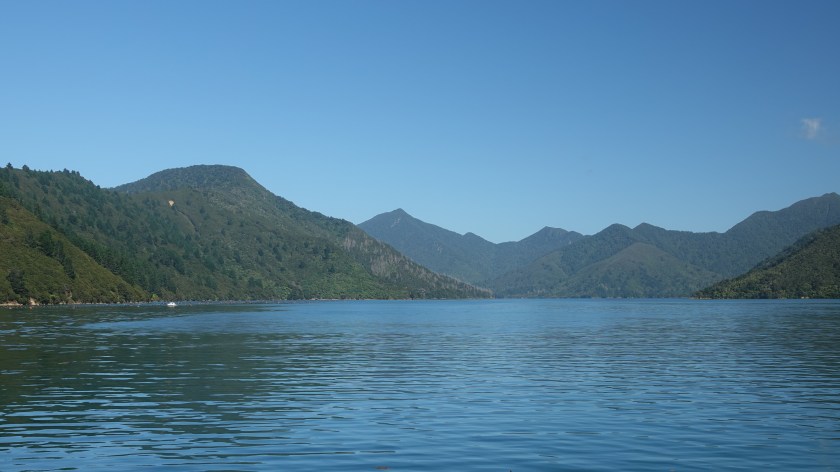
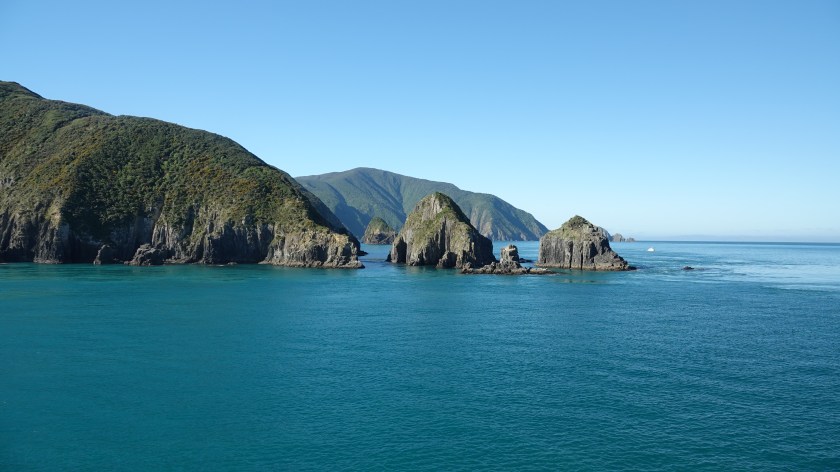
Marlborough Sound
DSC01300.JPG
Sting Ray
DSC01253.JPG
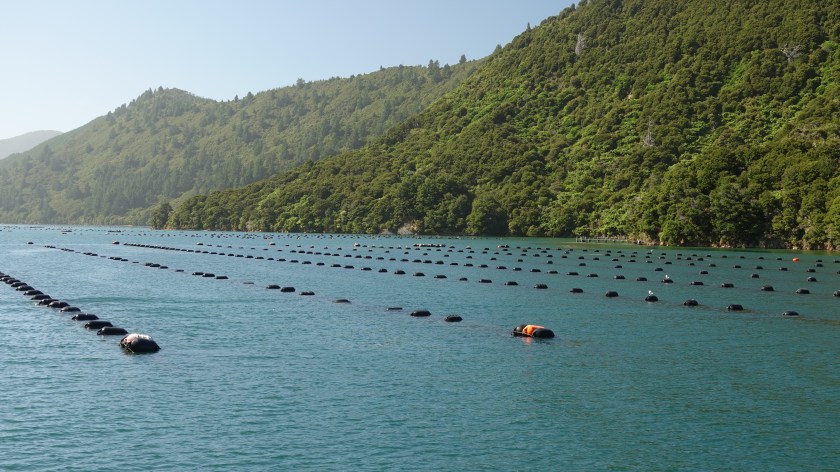
Green Lip Mussel Farm
DSC01286.JPG
Look at the Color of the Water
DSC01270.JPG
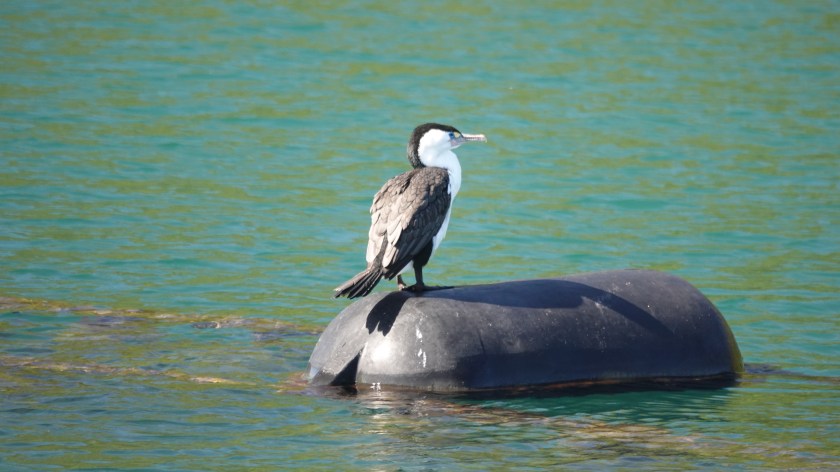
Taking a Break
DSC01249.JPG
Another View from the Pelorus Mail Boat
DSC01297.JPG
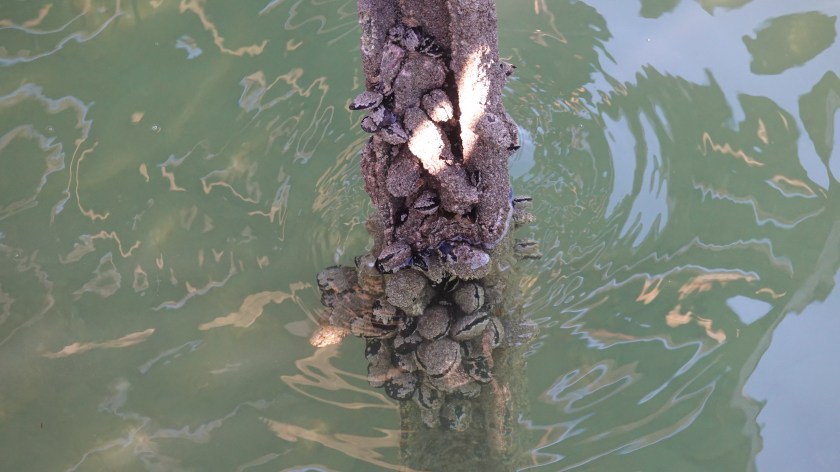
Mussels Everywhere!
DSC01237.JPG
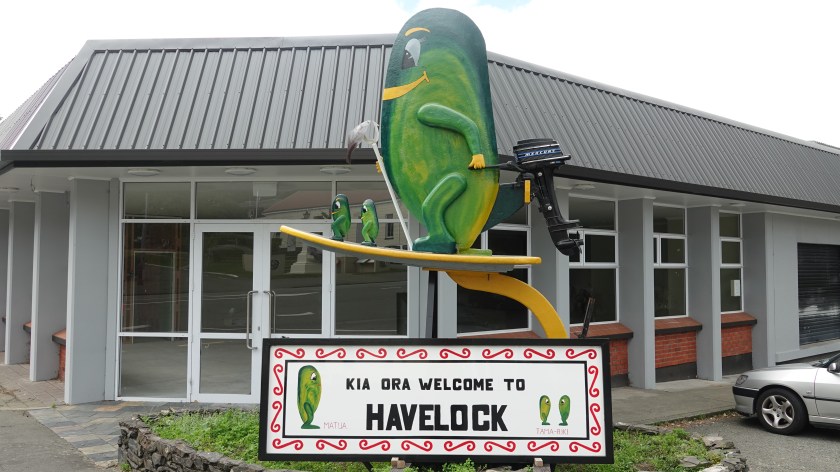
3-D Sign of the Day
DSC01234.JPG
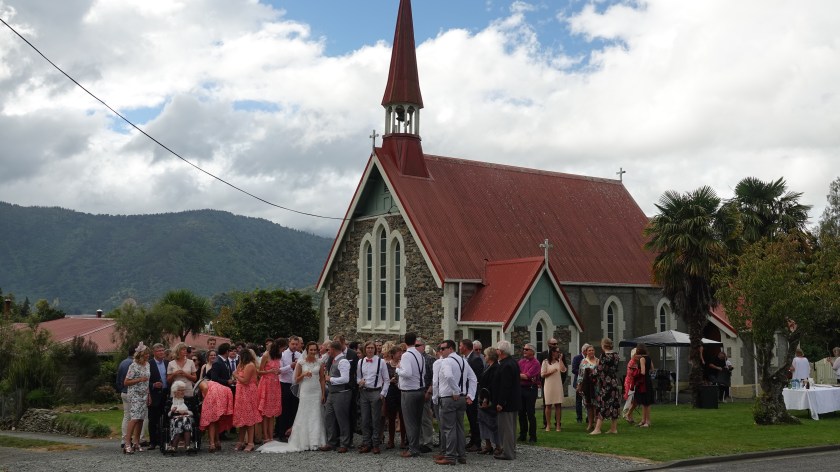
A Kiwi Wedding
DSC01227.JPG
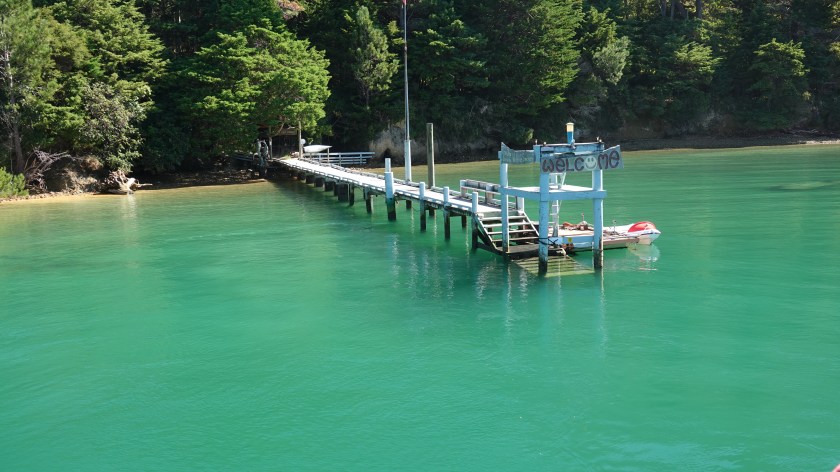
Welcome to Havelock!
DSC01221.JPG
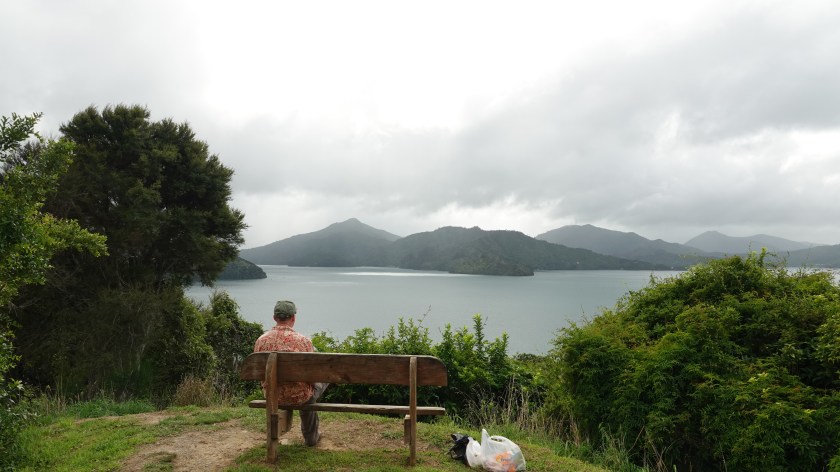
Herman Picnicking
DSC01214.JPG
Love the Different Colors!
DSC01208.JPG
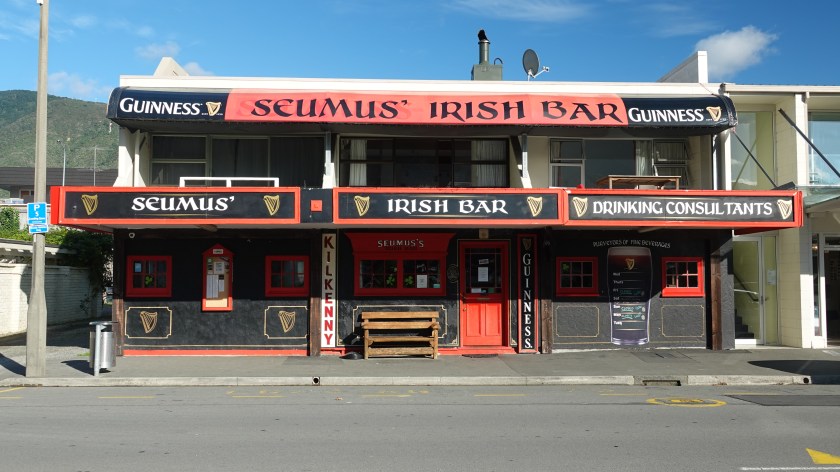
Drinking Consultants
DSC01207.JPG
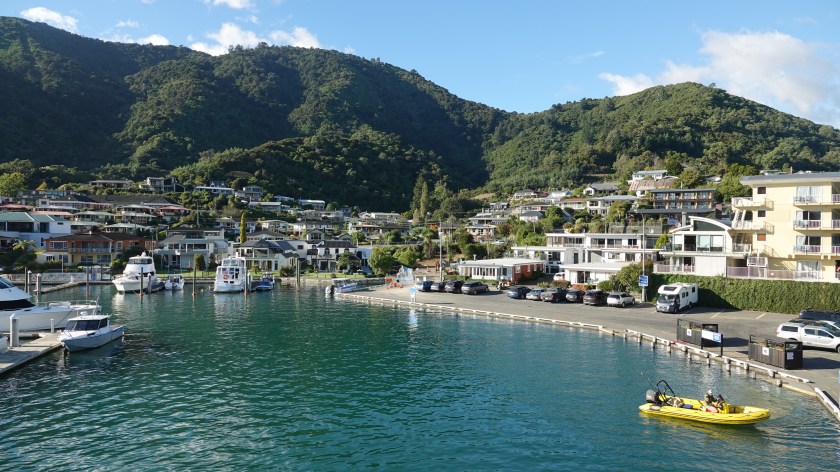
Picton Harbor
DSC01194.JPG
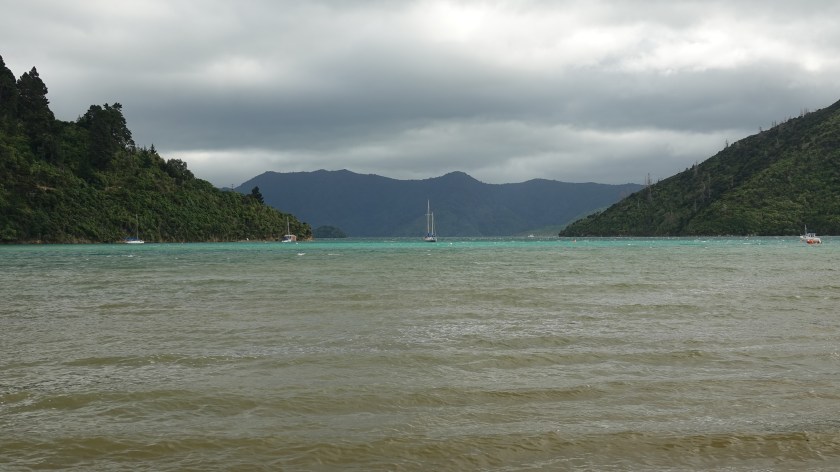
Entering Middle Earth
DSC01195.JPG
On the Ferry


As the ferry from Wellington (North Island) entered the South Island Tory Channel, drooping eyelids made drowsy from the gentle sway of the ship as it passed through open ocean, popped wide open as the first rolling hills of Marlborough Sound came into view. A hush fell over the passengers who stood on the observation deck, the view overwhelming any words that might be spoken. Magnificent, majestic, magical—there aren’t enough words in the dictionary to properly describe the scenery. Herman and I have seen many incredible places (Alaska, Norway, California Sierras), but none match the impact of New Zealand’s South Island. It’s no wonder that Peter Jackson chose to film the majority of his signature films in this part of the country.

We spent one night in Picton, where the ferry dropped the car and us off, thankfully without incident. The last time we took this ferry, Herman locked the keys in the car while on the ship, which led to an embarrassing delay while the ferry workers tried to open the door. Nothing like 100-200 pairs of eyes glaring at you to make you wish you could just jump off the side of the boat and swim for shore.

Saturday night, we stayed in Havelock, the green lip mussel capitol of the world, and I have to say that I think we have hopefully reached our low point as far as bad hotel rooms go. Now, I can deal with no TV or a dearth of electrical plugs—even a shower that results in a completely wet bathroom, but when the bed is so bad that finding a comfortable spot qualifies as exercise, I have to draw the line. Although the TV featured quite a few channels, the Internet was useless, which is why this entry and the last blog post are a bit late.

Easter Sunday we took a day long mail boat tour of the Marborough Sound. While we didn’t deliver any mail, we did visit a few remote homesteads. The people who live there have to be very self-reliant, since there are few to no access roads, electricity (most have generators) or communication. The serenity of the environment is quite enticing, but I think you have to be very honest with yourself if you’re capable of such a cloistered lifestyle. There is a family that runs a sheep farm of about 2,000 head in this area. It’s only the husband, wife and two children, one of whom has gone off to school on the mainland. The younger child learns via correspondence courses, which are delivered to her via the mail boat. She will probably join her brother on the mainland when she gets older. The trip also included a look at a green lip mussel farm, complete with raw samples, if you were so inclined.

We are now in Nelson, where we’re taking a day off to catch up on photo and blog uploads. Our room is a major upgrade from the one in Havelock, so we are happy campers. Happy Easter to all who are still celebrating! Until next time.

One Month Anniversary


It’s hard to believe that we’ve already been gone for a month on our little adventure! We’ve developed something of a routine when we roll into a new accommodation. If we’re staying for longer than one night, all the suitcases and paraphernalia join us in the hotel room. If we’re just in town for one night or on an upper floor without elevator access, we bring in our carry-ons, which include an impressive amount of old, but serviceable, electronics/technology. To be honest, if we were to lose our clothes, it would be less traumatic than the loss of our VGA computer-to-TV cable.

But the most brilliant addition to our luggage is an egg cooker. Breakfast in New Zealand and Australia usually consists of bread, jam, cereal, pastries and mostly canned fruit—not ideal in my book, even when it’s included in the price (and that’s rare). Most motels have kitchens, but not all of them have a stovetop, so our first purchase of a tiny pot remains wrapped in cellophane on the back seat of our car, close at hand if a wayward seagull were to attack us (that’s a joke, folks!). Herman discovered the egg cooker for sale at Kmart. Yes, there are Kmarts in New Zealand!

As I mentioned in my last entry, we were in Nelson. At first glance, it seemed like a small town, but upon further exploration, it is actually a good size city. After our rest day, we drove around the city, visiting the Anglican church and some charming Victorian era workers’ cottages that have been renovated. The big news of the day was that we walked up to the Centre of New Zealand. Yes, I said “we,” all uphill to the top, 1.2 miles round trip, but it was worth it for the view. Don’t ask me how they judged that this spot was exactly the center of the country.

Nelson is also known for its arts scene, so we visited Hoglund Art Glass in Richmond. The vases, paperweights, jewelry, etc., were so beautiful that we were tempted to buy something, but cooler heads prevailed and we left empty handed.

While we were at the Weta Workshop in Wellington, we bought a book of “Lord of the Rings” filming locations, many of which are located on the South Island. One notation that caught my eye was mention of a jeweler by the name of Jens Hansen, whose shop is located in Nelson. LOTR director Peter Jackson asked Mr. Hansen to design the One Ring for the movie. Unfortunately, he died before he saw his creation on the screen, but his son and other designers continue on. The plan was to visit the shop and get a photo of the One Ring, though when we got there, we found out that there were many variations made for the films, including one that’s more than 5 inches in circumference! We got to hold it, and it’s heavy! As luck would have it, Mr. Hansen Jr. (I’m embarrassed that we didn’t get his name) was there, so you’ll see a photo of him posed with us. Also, to my great surprise, Herman noticed how entranced I had become with a Hansen designed rose gold kiwi and chain, so he bought it for me. The staff was so delighted about our purchase that I secretly wondered if we had helped them make their payroll for the week.

After four nights in Nelson, we’ve moved on to Takaka (pronounced with the emphasis on “Ta”). On the way, we stopped in Kaiteriteri to take a short boat tour. What a beautiful area, with water in shades of green and blue and golden sand! We finally got to see some fur seals lazying about on the rocks and one korora, the smallest penguin in the world, swimming in the ocean by itself. My guess is the rest of the penguins are on Easter break, and this little fellow picked the short straw, so he has to swim around while tourists ooh and ah.

Later that afternoon, we joined a convoy. About a month ago, a cyclone blew through the Takaka Hill area, destroying large areas of the mountainous roads that lead to the town. Thus, we had to wait until 5 p.m., along with all the other people heading in that direction, for the workers to finish their day and open the road for four hours. Having lived in California for 20 years, I thought I’d seen my share of mudslides and the damage they cause…I was wrong. Fortunately, we’ve heard that the road is scheduled to be opened permanently on Saturday, our day of departure.

Today, Herman hiked to the Wainui Falls, while I enjoyed the peace and birdsong in the parking lot. Afterwards, we drove 10 kilometers on a dirt/graveled, mountainous road to one of the most pristine beaches I’ve ever seen in my life, Totaranui Beach. On the way, we stopped while a couple of young guys, obviously driving too fast, tried to pull their car out of the dirt berm. They were lucky that the berm stopped their car’s motion, as they would have otherwise been at the bottom of a very deep chasm. Upon seeing that they had plenty of help, we continued on to the beach.

Tomorrow is another day in the Takaka area before we leave the following morning for Westport. I will try to update again in a few days, but if you don’t hear from me, don’t worry. We’re heading toward some remote spots. Be sure to check Herman’s website for more photos.

Winter Is Coming!

We’ve done a lot of traveling in the last five days, but we’ve finally settled in for a rest day in Queenstown, where we are spending four nights. So, let’s reminisce.

We spent our last day in Takaka driving to the Farewell Spit, which is at the most northern end of the South Island. Strangely enough, if you look at this part of the island on a map, it looks like the body and, most prominently, the beak of a kiwi. Herman took off for a short hike along the bluff above the coastline while I drove to an outlook point and marveled at the waves crashing against the rocks, where a couple of seals were trying to sun themselves. There were just a few people hiking around, so for a moment, I felt like Catherine looking out over a bluff in “Wuthering Heights.” The sheep farm that surrounded the area only added to the effect.

Oh, and I spent some of that time scratching. New Zealand has one pest, sandflies, and they’re most prevalent on the South Island. For sure, they like me! Herman only has one bite so far. The only solution is DEET insect repellant and long sleeves. We thought we’d lose them as we traveled toward colder climates, but they only seem worse! Argh! I can’t believe I’m saying this, but I almost prefer mosquitoes. At least you can hear them coming. You don’t see these little buggers until they’re biting you.

Upon leaving Takaka the next day, we stopped at one more scenic lookout before we headed back down the mountains for our trip to Westport. The short walk to the lookout (apparently New Zealand loves to force you out of your car) led along a path populated with a few bell birds. Their call is one of the most beautiful sounds I have ever heard. On the way to the top, we had a rather chatty fellow fall in step with us, so I was frustrated that we couldn’t hear the birds. We waited until he left to make our return stroll to the car and were rewarded with the birds’ delightful calls. Herman even managed to get a picture of one.

In my last blog, I mentioned that we had traveled to Takaka by convoy, since road usage was limited due to the reconstruction after a cyclone passed through recently. On the day we left, the road was finally fully opened, and we had the chance to see the depth of the destruction. Landslide after landslide met our eyes, not only on top of the windy roads but many miles down in the valleys as well. It’s a true wonder that no one was killed or injured!

The drive to Westport was long and, for the most part, unremarkable, aside from the red and yellow leaves that were just beginning to take over the green trees. By the time we got to Westport, we only had enough energy to eat dinner before we called it a day.

The next morning was sunny and promising. Well, so we thought. We walked up to a viewpoint at a lighthouse in Westport. Ocean, crashing waves, yada, yada. Next was a seal colony, where Herman got some great shots and video of seals swimming around in a pool created by the rocky outcrop.

As we were leaving, I looked at the sky and noticed an ominous sign; dark clouds, and they were building quickly. I had a sudden vision of that end scene in “Terminator” where you see dark clouds building over a desert landscape. We proceeded to drive along the coast toward the pancake rocks/blowholes. At that point, it was just sprinkling, so I decided to join Herman on the path. We saw these pancake rocks 20 years ago, but they’re still remarkable. Apparently, there are several theories as to how they formed into such an odd shape, but no one knows for sure.

We should have waited another hour to see the blowholes, as they weren’t very active while we were viewing them. However, less than a half-hour later, those Mount Doom-like clouds let loose their weight of rain and wind. Herman bravely fought through it to get some photos along the rest of the route to Hokitika, but even he finally, grim-faced, put away the camera and concentrated on steering us toward the hotel. When we arrived, we managed to get into our room before the deluge overtook our location. During the night, it rained so hard, I felt sure we would be floating in the ocean, which was just on the other side of a berm, by morning.

The next day we headed to the Herman gold standard of views: the Franz Josef Glacier. It was already turning cooler as we left Hokitika, so by the time we reached the community near the glacier, it was downright cold! We had hoped to check in at our hotel before Herman went on the hike, but alas, the room wasn’t ready. At that point, the weather was dry and I suggested that Herman should go ahead and take his hike before lunch, but he was hungry (as was I).

I guess you know what came next. We drove to the parking lot for the glacier trail and at just that moment, a cold, gale wind roared across the landscape, followed by spits of rain. I was never going to make this walk, so I sat in the car with my Kindle while Herman bravely set off on the trail. I could see the base of the glacier through the windshield just fine, thank you very much!

It was rather amusing to watch people as they exited their cars, lips set in grim determination, adding more pieces of clothing to their attire as they prepared to set off on their expeditions. One guy wore a woolen hat, a scarf around his lower face and neck, and a couple of thick layers around his upper body. Only one problem I could see; he was wearing shorts!

My amusement quickly turned to slight alarm as the wind continued to strengthen. Our little car rocked back and forth, and I had visions of it turning over. I also envisioned Herman being blown off the trail, so I was relieved when he emerged, cold but whole. He said there were waterfalls everywhere you looked along the trail, partly because of the rain and partly runoff from the glacier. We drove back to the hotel, bemused by the people we saw still making their way through the wind toward the glacier parking lot. We heard later that the road we had driven down that morning was now closed because of the weather.

Tuesday, we drove to Lake Matheson (known for its mirror like surface) and Fox Glacier. Even though this area was only about 16 miles from Franz Josef, the weather had greatly improved, though it was cold and there was snow on the tips of the mountains. Herman and I agreed that Fox Glacier presents a more impressive impact, as you can see a wider expanse of the rocky valley floor created by the ice when it first carved out the area. We saw a lot of large tractors removing boulders in the wash below the glacier, perhaps hoping to limit the landslides that appear to be a common occurrence.

Yesterday (Wednesday, here), we made the long drive to Queenstown. I had a note that the hotel in Queenstown said we needed to check in by 5:30 p.m. No problem, we thought. And then we saw the scenery. Oh! My! God! A postcard photo op around every turn, and I’m not exaggerating. Vistas of snow-tipped mountains rising from iridescent blue lakes and grassland, dotted with trees in autumn colors of red, orange, gold and yellow. You could imagine Gandalf from “Lord of the Rings” galloping along the landscape. I don’t think we drove more than a mile at any point during the journey without stopping. By the way, I hope my friend and loyal reader, Jan Carson, will take note of the photos (both on this blog and on Herman’s photo site) of the red trees, as we sought them out just for her. After our arrival in Queenstown, just 15 minutes shy of the deadline, we walked to a restaurant for dinner (of course everything is on a hill, so I should say we rolled down to dinner), after which we decided to buy a few groceries so we wouldn’t have to rush out the door for breakfast while we’re here. Well, you would have thought that Armageddon was on its way or that someone had just announced a 50% off sale. The place was packed with people jostling each other for whatever food items they were trying to find. Even the checkout was swamped. Herman had forgotten the English muffins, so he went back to get some while I waited with the stuff we’d already purchased. In that little time, the store grew still, with nary a shopper in sight. Perhaps a black hole or a time warp swallowed them up. Who knows?

So, you are all up to date. I’m signing off now to do…nothing. Herman is off hiking somewhere, of course.

Rainbows, Dolphins and Magic(al) Mushrooms

Herman and I have just returned from another world, or so it feels.

Our last two days in Queenstown were glorious, as Mother Nature decided to bring out her fall best: bright sunshine, cool temperatures and brilliant fall colors. We drove up to Glenorchy, an area of the South Island where most of “Lord of the Rings” was filmed. Much of the landscape is still undeveloped, though there were pockets of sheep and cows here and there, signifying farmers nearby.

On our last day in Queenstown (last Saturday), I took the cable car up to the highest point in the city to take in the view. Herman joined me after he hiked up the same route. On the way, we both noticed that a bungee jumping station had been set up among the trees. Bungee jumping is a very popular sport in New Zealand, though usually it’s set up above a body of water, which seems a little less insane than jumping off a tiny platform into a chasm of rocks and trees.

Sunday, we left the sunshine to drive to Te Anau, the closest town to the Fiordland National Park. The closer we got, the cloudier the sky became, and by the time we settled into our hotel, it had begun to rain and hasn’t stopped for more than a couple of hours since.

Due to the cold weather, we seriously considered cancelling the two-hour Milford Sound boat ride that we had scheduled. Almost 20 years ago, during our first trip to New Zealand, we had taken an overnight cruise on the Milford Sound, which is why we were unsure if the shorter trip would be worth it. Back then, we were passengers on a two-day, back-country trip in a 12-person bus that drove on a white gravel road through farmland and hills and dales before arriving at the Sound.

We had such a blast on that trip. The driver loved to tell jokes and make puns (since we were the only Americans on the bus, he joked about “fording” (as in the Ford car) streams. When it came time to stop for a snack, he filled a large pot with water from a nearby stream to boil for tea. When we stopped for lunch, we ate by a small lake with bell birds singing around us.

I should mention that the man drove like a bat out of hell. I was seated in the passenger seat beside him when the tire right under me blew. Fortunately, he managed to maneuver the vehicle to an upright stop by using the built-up berm on the side of the road. We all filed out of the bus to wait for him to change the tire. With lug wrench in hand, he proceeded to remove the lug nuts, but to no avail. After several more tries, he commissioned the rest of the male passengers to jump on a wrench extension to try and loosen the nuts, but they still wouldn’t budge. Since we were miles from civilization, his cell phone wouldn’t work, so he told us to wait while he jogged to the nearest farmhouse to call a tire service. An hour later, the service technician arrived, deftly removed the lug nuts and changed the tire. Our driver had been turning the wrench in the wrong direction! We teased our driver for the rest of the day, but he took it in good stride.

Anyway, back to the present. We decided not to let the rain deter our plans, so we headed toward Milford Sound. There is one great advantage to rain: waterfalls, hundreds of them around every corner! The most amazing sight, upon exiting a tunnel that ran through a mountainous area, was a 180-degree rock wall sprouting waterfalls wherever you looked. Herman is a great photographer, but we both agreed that pictures just can’t do this scenery justice. This level of majesty has to be experienced in person!

We arrived at the Milford Sound boat terminal along with four buses of tourists. I feared that we would have to share a boat with hundreds of chattering, selfie photo-taking people, but fortunately, we had booked our trip with a smaller tour operator. Fortune smiled upon us a second time once the boat left the dock; the rain had stopped! We once again marveled at the scenery and the fur seals, even a couple of dolphins that swam alongside the boat (though I couldn’t see them except on Herman’s video, which was frustrating). The pilot gave us an up-close view of several waterfalls, which meant most of us were wet to varying degrees by the end of the trip. The sea “kissed” us several times, too, as we bobbed up and down across the water, but that’s half the fun, you know.

The next day we left Te Anau for Manapouri, a tiny village next to the boat terminal for the Doubtful Sound, where we would depart for an overnight trip. Since it was too early to check in to our land hotel, we drove around the area, taking a detour on a gravel road to a small lake, where Herman discovered red cap mushrooms that looked like throwbacks to the 1960s or something artificial like you might see at Disneyland’s Snow White and the Seven Dwarves ride. They’re called fly agarics, and we’ve been told they’re poisonous.

By the time we checked into our hotel, the rain had returned with a vengeance. There was a sign posted at the reception desk, saying that the Doubtful Sound day trips had been cancelled due to road closures. Strangely enough, the overnight trips were not affected, even though the rain pounded the roof above our heads that night.

Equipped with layers of clothing, a lined jacket, scarf, mittens and knitted cap, I waited with Herman to board the first boat for a tour of Lake Manapouri, then a bus that would take us along a winding back road to the wharf, where we would board the boat for the overnight trip across the Doubtful Sound. Of course, to no one’s surprise, the rain had washed out the road that led to the wharf, so we were forced to take tender boats out to the ship.

Now, I don’t have the best history with tender boats. The one we took back from the Falkland Islands to a cruise ship in 2011 was close to flooding due to high waves created by a nearby hurricane (and that’s its own story for another time). Then there was the tender boat used during our Galapagos Islands trip, where I couldn’t get my feet transferred from the rubber raft to the boat deck and ended up hanging like a bridge over the water while the deck crew held onto my arms, trying to pull me in. It gives one quite a complex. With some help, I managed to struggle on and off again once we reached the boat.

The last time we did an overnight tour, the boat was fairly basic, and everyone slept in the bowels of the ship, in one big room with beds separated by drapes. It was kind of amusing because you could hear people snoring in various keys of sound and vibrato, and it left you with a comforting sense of community. This time, we booked a private cabin, and I must say for such a small ship, it was quite luxurious. There was only one small problem. The bed’s height came up to my waist. Considering that the bed took up most of the space from any direction, the thought of trying the long jump or a pole vault to leap onto the mattress was out of the question. Once I clambered onto the bed, I had to think long and hard before getting off again.

The trip through the Sound, as you can imagine, was amazing. The mist, the rain, the silence, the waterfalls; all of these things added to the magic that is New Zealand. We had a group of 45 high school students with us, but they were reasonably well behaved for their age and didn’t disturb the atmosphere. During the trip, we saw rainbows, even double rainbows, and not just one of each! The most exciting moment came the next morning as we were leaving our overnight mooring spot. A pod of 10 dolphins rode the ship’s wave for a good 30 minutes, occasionally leaping in the air to our delight. I watched them until, due to the cold, I couldn’t feel my fingers anymore.

Since our hotel in Manapouri was not to our liking, we decided to leave for Invercargill right after we returned from the boat trip. Back on the road, we were still bedeviled with rain, though we had high hopes that it was beginning to dry out. Not! The closer we drove to Invercargill, the worse it got, and the wind picked up as well. You could see trees everywhere that had grown bent in half due to the force of the winds coming off the water.

We couldn’t find a last-minute hotel in Invercargill, so we booked one in Bluff, which really is at the most Southern part of the South Island and feels like you’re at the end of the world. With heads down against the wind and the rain, we struggled with minimal luggage up to the room, which of course, was up some stairs. Later, upon our return from the restaurant next door, we stumbled on foot through the rain up the driveway, where I had a fit of hysterical laughter, and then the stairs.

Friday morning, we drove up to the lookout over Bluff and stopped to take in the view. The wind was blowing so hard (harder than what we experience at the Franz Josef Glacier) that we feared our car might really blow over this time. I wish I could say that the weather has improved, now that we’re in our three-night apartment in Invercargill, but it’s still blustery outside (and it just hailed). Today, March 21, is a Netflix day. The weather report says Sunday should be cloudy and dry. Monday, we leave for Dunedin, where we expect a much better level of accommodation (can’t wait!) and dryer/warmer weather.

Dunedin: A City Paved by Gold


Perhaps it was the drier weather or the (slightly) warmer temperatures, but Herman and I fell in love with Dunedin, a city of 120,000+ people helped along by the Central Otago Gold Rush of the 1860s. The city is rich in culture and education (it’s home to the oldest university in New Zealand, the University of Otago), and aside from its more southerly location, would be an ideal retirement home for us, if only New Zealand would let us remain in the country permanently.

Before we arrived in Dunedin, we took a side trip to the Catlins, an area of native forest and rugged coastline in the Southeast of the South Island. Our main goal was to catch a glimpse of the yellow-eyed penguin, but our hopes remained dashed because these creatures are usually only visible along the coastline around sunset during this time of the year, which didn’t jive with our schedule. However, Herman had an amazing encounter of the first kind with two rather large seals (not sure of the type).

As you’ve figured out by now, New Zealand is rich in scenic outdoor areas that attract active people, so you can imagine this city girl’s delight to explore Dunedin. The first day, we took it pretty easy, taking in a couple of government buildings for their external architectural design, the city’s main art museum and a movie (“A Wrinkle in Time,” terrible movie!).

Day 2, we toured the Olveston Historic Home, built for Dunedin businessman, collector and philanthropist David Theomin and his family, and designed by acclaimed English architect Sir Ernest George. Everything about this Jacobean style home, from the interior to the grounds, was so well-planned out, that we caught ourselves taking notes for our future home, whatever and wherever that may be. We especially liked the small detached glass solarium that featured a diversity of colorful flowers and interesting greenery/plants and the “just-right” sized vegetable garden. Inside, each room was tastefully decorated with curated items (by curated I mean that someone put thought into how even the smallest statue or framed item fit with the theme of the room). Theomin’s daughter gifted the home and all its furnishings/décor to the city in the 1960s, so I can only assume that her parents were responsible for its outfitting. On an upper floor, in the game room, there was a huge pool table and a couch set on a raised platform so that spectators wouldn’t have to crane their necks to watch the action. My kind of people!

In the afternoon, we visited the Dunedin railway station, which is one of the most photographed buildings in New Zealand. The booking hall features a mosaic floor of almost 750,000 Minton tiles. The station is still functional, so we decided to book a sightseeing train along the Taieri Gorge for that Thursday.

On Thursday, we went to see the Larnach Castle, just outside of the city. Larnach, built by prominent entrepreneur and politician William Larnach, is not really a castle (though it sort of looks like one), and he referred to it as “The Camp.” But talk about your prime real estate! From the tower (reached by a DNA-style winding staircase with steps barely big enough to hold one foot, let along two), you can see the surrounding hills on one side and the ocean on the other. For a tourist site, the gardens were very peaceful, and the bell birds were in full song without fear of interruption. Larnach Castle was also delightful for Herman, who was finally allowed to take interior photos (for some reason, many historic homes frown on that). I really enjoyed taking in the polished wooded doorways with their raised decorative wood flowers and leaves. In one of the rooms, there was a display of women’s clothing and underthings from the time, using mannequins or framed as part of a painting.

After a detour drive along the coast, where we saw a lot of sheep, some looking like giant fleecy rolled-up Ace bandages with legs and heads, and still no penguins, we headed for the Dunedin train station. The train ride along the Taieri Gorge was amazing! Just when you think you’ve seen every facet of New Zealand scenery, it surprises you again. I tried not to fixate on the fact that we were basically balancing on Eifel Tower-like scaffolding whenever we crossed a bridge over the chasms. I’ll let Herman’s photos stand in for my words about the views.

Sadly, on Friday, we left Dunedin and the dry weather (sigh!), and headed for Oamaru. Due to the rain, there wasn’t much incentive for sightseeing, other than a stop for some lazy seals and mysterious round rocks, called Moeraki Boulders. When we got to the hotel in Oamaru, we basically threw our belongings into the room, ran in after them and called out for pizza.

Not to be outdone by the wet stuff, we toured the Steampunk HQ museum the next morning. For my science fiction/fantasy friends and fellow writers/readers, Steampunk needs no explanation, but for the rest of you, just think about the old television show “Wild, Wild West” and you’ll get an idea of what the genre entails. It was a lot of fun, especially when we experienced “The Portal.” Nearby, in an outdoor park, we saw a giant unicycle and some other cool sculptures.

Now, we were heading back into the more remote parts of the country as we drove toward Mount Cook. After spending the night in Twizel, we arrived to a wet but snow-covered display of mountains, pale blue lakes (caused by silt from the glacial run-off) and glaciers. For once, we scored with the hotel. The mountains filled the window view from both our living room and bedroom! Herman spent most of the next day hiking around, and I even managed a short hike to one of the glacial lake lookouts. Much to Herman’s frustration, the weather didn’t improve until the day we left, when we awoke to clear blue skies. To me, the rain gave the scenery a rather moody, mystical quality, but he preferred the snow-covered mountains sharply outlined by the blue sky. It also made the fading autumn colors stand out a little better.

Yesterday (Tuesday, May 1—the beginning of our last full month in New Zealand!!), we drove to Lake Tekapo and stumbled upon the Mount John University Observatory, sponsored by the University of Canterbury, at the top of a very high hill. We were both disappointed that we hadn’t been able to take advantage of the nightly star-gazing at the observatory because it had been RAINING until that morning. Below, in the little village, we stopped by the Church of the Good Shepherd, located right on the edge of the lake. Twenty years ago, when we visited this area, there was almost nothing touristy to mar the views and you had to hike a short trail to reach the church. Wow, what a difference, now that the world has discovered New Zealand!

Anyway, you are now up to date with our journey. Tomorrow (Thursday, May 3), we leave for Christchurch, where we will remain for five whole days! Meanwhile, we are in Timaru in a motel with such terrible beds, that if you wanted to elicit a confession from a suspected criminal, just force him to try and sleep on this mattress and he would be admitting his guilt (whether true or not) within the hour. Cheers!


Edoras, Christchurch and Some Amusing Anecdotes


On our way to Christchurch, we had an opportunity to visit the gold standard of “Lord of the Rings” filming locations, Mount Sunday, a sheer-sided hill where the film crew needed nine months to build the fictional city (and castle) of Edoras. I have always loved that particular setting in the movie, so it was a thrill to see it in person, even though all evidence of any structures has been demolished and removed. My guess is that the filming must have taken place in autumn, as the surrounding snow-capped mountains matched almost exactly what you see in the second movie.

To reach Mount Sunday, Herman had to navigate 20 kilometers of a gravel road, which took us a good hour to avoid damaging our non-4WD vehicle. He even forded a stream! Needless to say, the scenery along our slow drive made it all worthwhile.

Afterwards, we made the long drive to Christchurch, where we’ve been vegging out for the last three days. We plan on taking it easy until Wednesday, when we’re driving on to Kaikoura for two nights, Blenheim for one night, then a ferry ride back to the North Island.

We’re also taking care of some personal “housekeeping” issues, such as a car checkup and haircuts. A haircut is a very personal thing for me, so I place a lot of faith in the stylist who cuts my rounded bob, a classic style that has been around for at least 30-40 years. Short of paying to fly my stylist of 20 years, Maria Romanello, here to New Zealand, I’m forced to rely on a stranger—not a palatable thought on my part—but I’ve put it off as long as I can. Wish me luck.

Christchurch is still recovering from the terrible earthquake that hit the city in 2011, thus many of the tourist attractions we visited 20 years ago are still closed. I remember on our last visit thinking that we would like to live in Christchurch, but it’s grown so much and endured so much damage that the inner city is not as inviting as it once was. However, we did visit the Christchurch Art Gallery, opened in 2003. The collection was a nice mixture of classical to modern, spaced out over two floors, and I would recommend it. Their café serves one of the most amazing cheese/charcuterie platters I’ve ever had the pleasure to eat.

Outside the city center, in the surrounding hills, there is no end to the walking/hiking/biking trails. We drove to an outlook point and struggled to reach our destination amid the cyclists who seemed to be effortlessly biking up the hill. Even on the way to the seaside town of Akaroa, the oldest town in Canterbury, cyclists crowded the narrow, windy road. Of course, between the narrow roads and the cyclists, our half-day tour turned into a most-of-the day drive. Our backsides did not thank us for that. Where is a transporter (a la “Star Trek”} when you need one?

When I started this blog, I mentioned that there have been numerous interesting escapades during my/our travels throughout the years, so here are a couple of stories to keep you entertained until the next blog:

The Cambodian Elevator Heist

In May 2004, I interviewed Art Education Professor Carlos Silveira at CSULB, my last place of employment, about his receipt of a humanitarian award. During our conversation, he told me about his desire to work with disenfranchised Cambodian children by using art to empower their voices so they could express their wishes and desires. I was so taken with his passion and commitment to the project, that eight months later, I landed in Cambodia with a two-man crew to produce a documentary titled, “To Touch the Soul.”

At one point during the three weeks of filming, my film crew and I were in an auditorium on the top floor (5th or 6th) of the Pannasastra University of Cambodia, where both the Cambodian and CSULB university students were meeting with Carlos. Although January is considered the coolest and driest time of the year, Phnom Penh was still humid, with daytime temperatures in the 80s, thus the top floor was a bit stifling.

I had spent time in the ground-floor library before, using the computer for e-mails and updates to my website, and I knew that it was one of the few rooms in the building with air conditioning. Apparently, so did quite a diverse group of people. It was rather amusing to be sitting next to a monk dressed in the traditional orange robes and sandals as we both made use of modern technology.

Since mental images of icebergs and snow were not enough to overcome the physical heat on the upper floor and my film crew seemed to have everything in hand, I headed for a small elevator hidden behind a heavy curtain in a corner alcove. With thoughts in my head of cool breezes wafting over my body from the library’s AC, I mindlessly pushed the button to call the elevator to the top floor and stepped into the cubicle. The elevator door closed at the same time as the interior lights went out.

Hmm, I thought. Okay, let’s try pushing the “Open Door” button. Nothing. Let’s try waiting to see if the power comes back on. Five minutes later, it’s beginning to get a bit warm in such a small, enclosed space. I wasn’t alarmed about being stuck in the elevator, but I was a bit concerned about how long it might take before someone discovered my disappearance. Since I didn’t want to interrupt my crew’s work or Carlos and the students, I hadn’t told anyone where I was going. This was going to be embarrassing.

Hoping to alert someone without too much drama, I weakly called out, “Hello?” Silence. A little louder, “Hello?” Nada. Okay, it was time to pull out all the stops and yell, “Help!” Fortunately, someone with really good hearing alerted Carlos, the students AND the film crew to my predicament, so now the entire group, with camera rolling, were congregated outside the elevator. While one of the students went to alert a caretaker, the rest of the group made many a joke at my expense and even sang a song. Finally, the doors popped open and everyone cheered. I threatened my film crew with dire consequences if the footage ever saw the light of day (the fiscal power of a producer has its advantages). I believe I am the only one in possession of this footage. And my captor, the elevator, has wisely stayed mum.

The Hurricane Cruise

In 2010, Herman and I took a cruise to South America that would sail from Buenos Aires, Argentina, around Cape Horn to Valparaiso, Chile. We were pretty excited about this trip due to the opportunity to see King Penguins on the Falkland Islands. Well, we hoped we’d make it to the Falklands. About 50 percent of cruises fail to send tender boats to the Falklands due to the sea and weather conditions. That part of the ocean is often called “The Washing Machine,” and now I know why.

On the day we drew close to the Falklands, our captain announced that conditions were calm enough to allow everyone to visit the capital Stanley via the tender boats. The trip to Stanley via the boats was uneventful, and we booked a tour on a 4WD vehicle to bump and sway across the hillsides until we reached the King Penguin colony. At that point, a cold wind began to blow along with some sleet. Even the penguins were beginning to gather in groups for protection against the weather. That should have been a warning sign.

By the time we got back to the city center, the cruise personnel were hustling people back onto the tenders. We were on one of the last ones able to leave the harbor. What a ride! The little boat tossed and turned, with waves sending water onto the floorboards, and I wondered if we should start bailing it out. Fortunately, we made it to the boat, which sailed off with haste.

Within 12 hours, the ship was bucking like a bronco. When the front of the ship would hit a wave, the resulting impact would vibrate through the entire ship, from stem to stern. The crew and the captain warned everyone to stay off the outside decks, though the interior activities, such as the restaurant and the top-floor viewing platforms were still open.

We decided to have lunch because we weren’t sure if there would be a dinner service. All around us, you could hear plates crashing to the floor. We sat by a window, which wasn’t the wisest thing to do, since we had a first-hand view of the undulating waves. I’m not given to seasickness, but I must admit to a bit of queasiness at that point. As we finished, the crew announced that the restaurant was closing. Before we went to our cabin, we stopped up top at the enclosed viewing platform. That was intimidating to watch waves crashing over the 11th floor level of a cruise ship when it plunged into a wave’s trough!

For the next 36 hours, we were prisoners in our cabin, leaning left and right or stumbling across the room while holding on to anything immovable, due to the manipulation of the ballast, which was the only way to keep the propeller and rudder in the water under such conditions. When I told this story to a friend, this person commented that it must have been difficult to take a bath. I replied, “Take a bath? Hell, you thought twice about going to the bathroom!”

Fortunately, the ship didn’t sustain any serious damage, and there was only one passenger injury. We were told that, at the height of the storm, we were enduring 90-foot waves and over 100-mph winds! Once the danger was behind us, everyone laughed and joked about buying t-shirts that said, “I survived the hurricane cruise of 2010.” I still haven’t received mine.
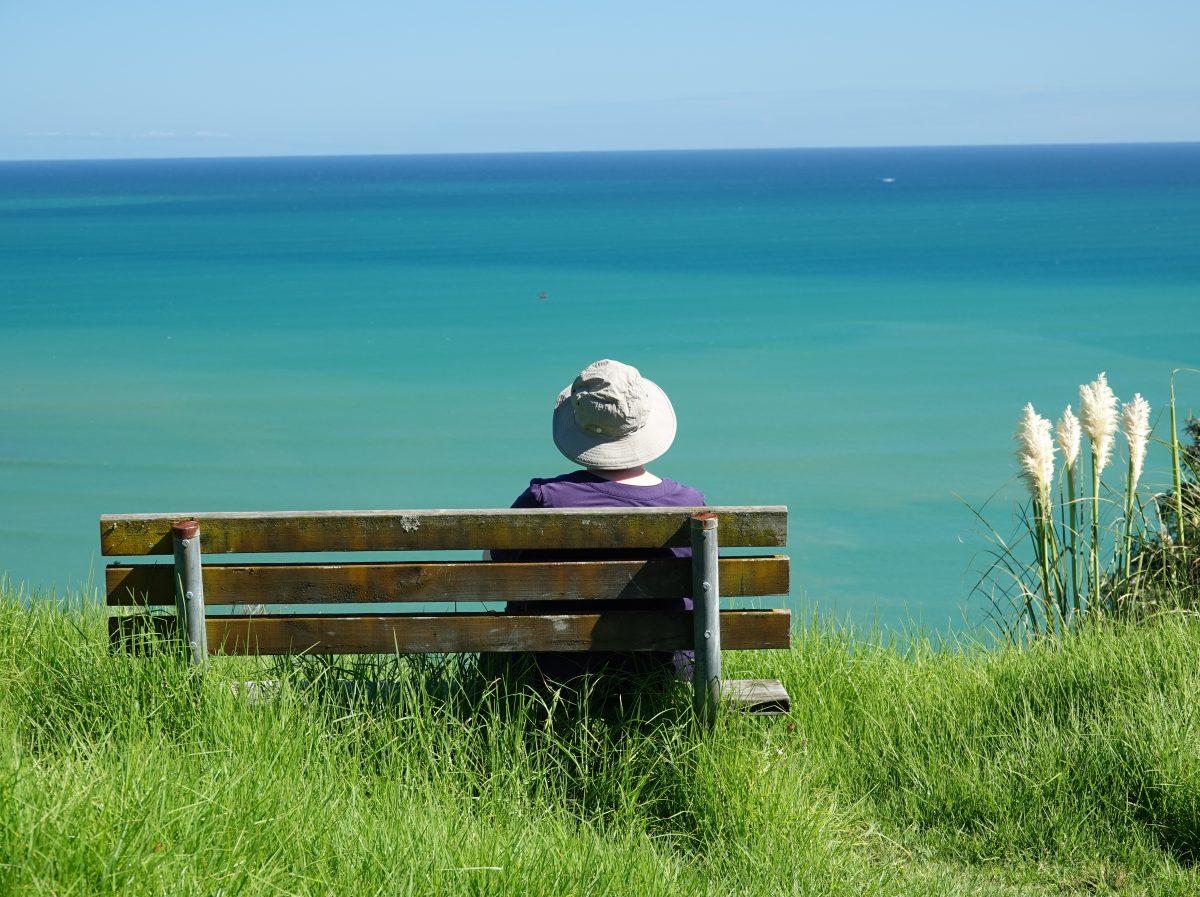
Mem’ries Light the Corners of My Mind!

Tonight is the end of our second (and last) day in Coromandel Town, part of the Coromandel Peninsula, an area of New Zealand that remains among my fondest memories of our first trip to this country 20 years ago.

Before we reached the peninsula, we traveled three days along the Bay of Plenty, first to Gisborne and then to Hicks Bay on the second day. On the way to Hicks Bay, we stopped at the Tolaga Bay Wharf, which is 600 meters long! With the cloudless, bright blue sky and the glaring sun, the wharf seemed to go on into infinity. We also traversed yet another unpaved road in search of the most easterly lighthouse. I let Herman climb the 800 steps to reach the structure.

Now that the days are getting noticeably shorter, here south of the Equator, you tend to forget that perhaps driving on a dicey road as the sun goes down is not the smartest idea. I held my breath as we returned from the lighthouse, watching the arc of the sun as its trajectory trended downward and the shadows lengthened. I breathed a sigh of relief when we hit pavement again, but we still had to get dinner and find our accommodation, a bed and breakfast.

Did I mention that this area is very remote? That meant no street lights and hardly a house in sight, much less a restaurant. We found the entrance to the B&B but decided to first try and find something to eat. We stopped at a motel nearby, but the restaurant appeared dark, so we drove on. We stopped in what looked like a town (there was a small store and a school), but there were no restaurants! Fearful that we might have to knock on someone’s door and ask if we could join them for their evening meal, Herman spoke with the personnel in the store, who told us that the motel we bypassed did indeed have a restaurant. So, we went back and dubiously entered the establishment. Although dinner service didn’t start until 6 p.m., they did offer takeaway (take-out), so we gratefully ordered cheeseburgers.

Now, it was pitch black outside! We crawled down the road until we found the entrance to the B&B owner’s property and dubiously turned onto a long, dirt path that led to the house. By this point, the wind was blowing hard, and I was fearful that the rain might start at any minute. I was told that the key would be located in a lockbox. As we discovered the next morning when we tried to return the key, the lockbox was impossible to find, so we were lucky that the husband showed up right behind us.

We were so grateful to have reached our destination and it was so dark, that it wasn’t until the next morning when we realized that we’d spent the night in a little patch of paradise. You could see the ocean and the surrounding hills from either the bed or the cottage’s front porch, take your pick. And breakfast was home-cooked! Fortified for another long day of driving, we took off for Tauranga, the heart of kiwi (the fruit) country.

The distances between our destinations are not particularly lengthy, but highways in this country are rare and, in the Bay of Plenty and the Coromandel Peninsula, pretzel-shaped. Thus, the drive to Coromandel Town was l-o-n-g! However, we did enjoy stopping in Katikati, a town that features 75 murals on the sides of buildings in the town center.

When we finally reached the peninsula, the first place we stopped along our path of memories was the Cathedral Cove. You might recall this iconic spot if you’ve seen the second Narnia movie, where the children are magically transferred from a train station to a beach with a walk-through cave on one side and a huge rock in the water on the other.

Twenty years ago, the Cathedral Cove was something of a secret, and we had to hike through private farmland, a meadow, and over a high hill to make our way down to the cave entrance and the beach, both of which were only accessible at low tide. Now, the cove has become a popular tourist attraction, so a town (or at least a bunch of new homes) has grown up around it, along with an easier path to the water from the overlook where we stopped, brought about by the farm’s owners closing off access to the beach via their property. Our next stop was Shakespeare’s Cliff (or Overlook), where the varied colors of the water (shades of blue, green and purple) remind you of the colors of Paua shells. We ended the day by driving on yet another unpaved road (thanks to GPS directions), which led through an area of pigs and chickens roaming the road. There was a sign that warned one not to feed the pigs…okay.

During our first full day in Coromandel Town, I took the day off while Herman went wandering about, hiking among the kauri trees.

Today, Herman and I took a trip from the Whitianga wharf on a glass-bottomed boat with about a 300-horsepower motor. Boy, that little boat could move! We bucked over the waves as if we were riding a bronco in a rodeo. Yahoo! Along with a close-up view of Cathedral Cove and a cave formed from volcanic lava, we saw bottlenose dolphins (so close, you could almost touch them), red snapper fish and sea urchins.

We’ve decided that the peninsula is as far north as we want to drive, so we will now be turning south again, heading for Whangarei, 300+ kilometers from here. Oy!

North by Northeast

Our tour of the South Island has come to an end!

We left Christchurch after visiting the Canterbury Museum, the Cardboard Cathedral (yes, it’s really made from cardboard), relaxing, eating excellent food and surviving a so-so haircut (still not really happy with it), and drove to Kaikoura. While the area is known for their dolphin, whale and seal populations, we were only fortunate enough to have some more close encounters with seals. So far, we’ve been out of luck for spying any yellow-eyed penguins. Perhaps our luck will improve in Australia.

On the way to Kaikoura, we drove along the coast through mile-upon-mile of road repairs due to an earthquake that occurred about 18 months ago. The damage was jaw-dropping! I’ve never seen so much destruction along such a huge swath of coastland. In some spots, there were shipping containers stacked near a rock face, perhaps to hold back the worst of any future landslides—or to fill with rocks. My hat’s off to the engineers and road crews who are working so hard to put things in order before winter sets in.

After spending one night in Blenheim, we drove to Picton to board the ferry back to Wellington on the North Island. While the water was a little choppier than the last voyage, it was basically an uneventful trip, so I spent most of it chatting with this young woman who has been in New Zealand on a temporary work visa. The younger generations of today’s world are not intimidated by travel, and I find it pretty impressive how easily they settle in to a new place, even when the country’s language is different from their own. I’ve also met couples whose religious and cultural backgrounds are so different, that I can’t even imagine how they ever met. It’s a beautiful sight to see the human diversity that is expanding across the globe. I hate to break it to the people who disapprove of this sort of “mingling,” but it’s too late to stop it or change it back, I am thrilled to report.

After a one-night stop in Masterton, we drove to Palmerston North, which is a nice town with a bunch of good restaurants and an art/science/history museum. On our way, we had to take a detour due to recent storm activity. Mother Nature sure means business when she creates storms in New Zealand!

The morning of our departure from Palmerston North to Napier, it started to rain (again), and we drove down the road while Peruvian flute music from Herman’s iPod kept the beat with the rain on the windshield. It was so miserable that we decided to bypass the Pukaha Mount Bruce National Wildlife Centre, since the white kiwi that was usually in residence was no longer there. Sigh!

Suddenly, after crossing over a winding, hilly road, the rain stopped, as if on cue. Finally, some sun with which to view the countryside, so we drove to the top of Te Mata Peak with its 360-degree outlook over the surrounding hills and the distant ocean. We then drove to Cape Kidnappers, where there is a colony of Gannets…except they’ve already flown away for the winter to…Australia!!

For the last three nights, we’ve been in Napier, a beach town filled with Art Deco architecture that bears some resemblance to Miami, Florida. We also toured the aquarium, where finally we were able to get up close and personal with blue penguins and, oddly enough (for an aquarium), a pair of young kiwis. It was a real treat to see them walking around and poking their long beaks into tree limbs to dislodge small bugs. Even though I’ve seen plenty of photos of these birds and knew that they didn’t have wings (for balance), it was still a bit mesmerizing to watch them run around their glass enclosure so easily. Unfortunately, we couldn’t take any photos of the pair because kiwis are nocturnal, thus the lighting was very dim.

Tomorrow, we head for Gisborne and another trilogy of one-night hotel stays. I will probably report back once we reach Coromandel, provided the Internet access is fairly decent. It’s hard to believe that in a little less than three weeks, we will be leaving New Zealand and heading for new adventures in Australia! For now, ta-ta!

Farewell, New Zealand!

This will be my last post from New Zealand. I can’t believe I’m writing these words and that three months have passed so quickly! Tomorrow (June 3), we’re flying from Auckland (where we’ve spent the last two days) to Melbourne, Australia…well, at least I hope we’re flying to Melbourne. Due to an Air New Zealand schedule change made to our Los Angeles return flight (at the end of August), we’re unable to check in online for our flight tomorrow. I’m still not sure how the one affects the other, but perhaps Mr. Spock of Star Trek could explain it. All I got from the airline was the usual insincere apology. So, there may be a true adventure to report back to all you readers when I write my first post from Australia.

I want to leave you with a few impressions from our trip to Kiwi land. As you’ve probably figured out yourself from Herman’s photos, New Zealand is rich in scenic beauty and friendly, polite people. The most obvious proof of the population’s amiability can be witnessed on the road. If you move into the slow lane so a faster car can pass, the driver offers a wave of thanks. When you’re driving through a construction zone, it’s customary to wave at the guy (or gal) holding the slow/stop sign, and they almost always wave back.

We’ve seen people perform semi-dangerous passing stunts on the road, only to get a brief flash of headlights from the aggrieved driver in the opposite direction that he managed to avoid. In fact, Herman made a risky U-turn on what we thought was an empty street in Dunedin, coming into uncomfortably close contact with another car. The driver’s reaction? He rolled his window down and quietly said, “Remember, you need to check your side mirrors when driving on the left side of the road.” I think almost anywhere else in the world he would have been saying, “Learn how to drive, moron!” His polite, low-key behavior was most humbling.

Then there’s the language, or should I say, the dialect? The easiest example I can offer is the use of the word, breakfast, which sounds like “brikfust.” Yeah becomes “Yeea.” There are many more examples, but you get the idea.

At the end of my last post, I said that we were no longer heading north. Well, that was incorrect. We did briefly head south but then arced northward toward Whangarei, where we visited a really neat clock museum and saw the new “Solo” movie.

Then we took the long drive to Paihia, followed by a day trip to nearby Kerikeri to visit an old mission station, Herman’s walk through a mangrove forest the day after, and a ferry to Russell to visit the Pompallier Mission and Printery on our last day in Paihia. All in all, it was a peaceful, relaxing four days.

On May 30, we took the l-o-n-g road toward Orewa. On the way, we stopped to see the largest kauri tree in the country. It was so wide and truly an impressive site! Its age is estimated at about 2,000 years old. Fortunately, it’s still healthy despite a widespread tree disease threatening the kauris nationwide. While a few kauri trees are being planted, there seems to be little interest on the part of the government office in charge to give them a lot of attention. According to the person who was answering our questions, there is no economic advantage to their sustainability because of the length of time it takes for a kauri tree to reach maturity. By reaching maturity, he meant when the tree reaches an age to be “useful” to industry, which is what almost devastated it to begin with.

I’m trying to remember if I’ve mentioned this before, but most of my friends know that I really, really don’t like sweet potatoes or pumpkin (and please don’t write in the comments how much you love the stuff and that I’ve just not had a good experience with either vegetable, because my mind is firmly made up about it). Well, I guess the joke is on me because kumara, a type of sweet potato introduced to New Zealand by the Maori, and pumpkin are considered staples of the fall diet, though I have yet to meet anyone who will admit to liking the stuff. It’s so ubiquitous on menus that we’ve had to double-check with the waiters about the types of roasted vegetable used as side dishes. I’m telling you this because, on the way to Orewa, we passed through Dargaville, the home and capitol of the kumara. Potato, potata, Dargaville’s gotta lotta kumara!

So, that’s it, folks! Hopefully, there will be tales to tell from Australia, and if not, there’s always Herman’s photos. I’ll be in touch soon.