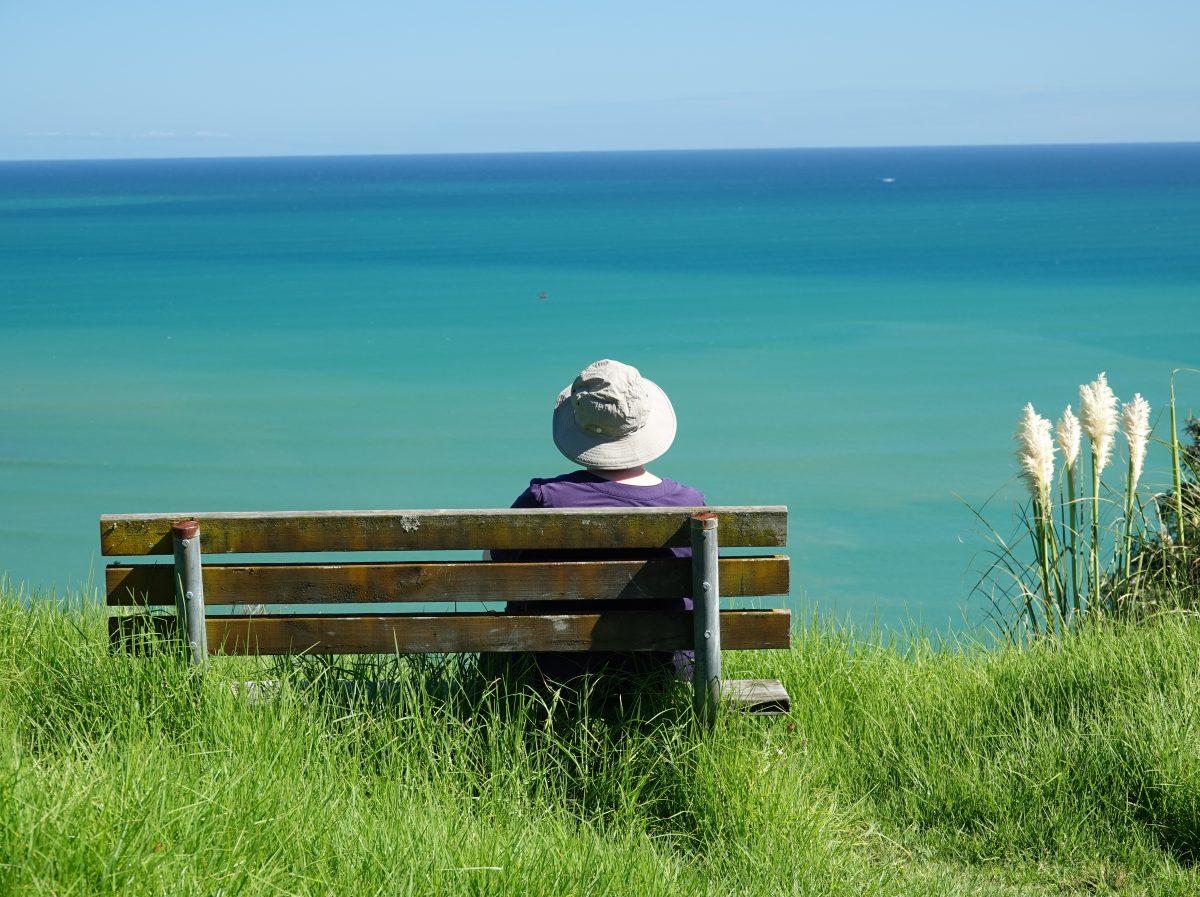
Marvelous Melbourne, Australia!

Everyone we met in New Zealand told us how much they loved Melbourne, and they were right! What an incredible, vibrant city, and we’ve barely scratched its surface.

Despite Air New Zealand’s annoying requirement forcing us to physically check in at the Auckland airport (instead of online) and the longest walk to a gate that I’ve ever experienced, we had a non-eventful flight to Melbourne and even a decent in-flight meal on Sunday, June 3. As with New Zealand customs, Australia’s customs personnel were efficient and non-dramatic. Oh, if only the U.S. could learn from other country’s policies for international travel! Air New Zealand has already posted on their website info about the new/updated U.S. travel requirements, which are guaranteed to make our return trip a pain.

Anyway, back to Melbourne. The city has a fantastic public transportation system, including free trams for everyone within the city’s center. And right by our closest tram stop was the State Library of Victoria, a neoclassical structure established in 1854 that is still in use today. While the first two floors are devoted to reading rooms, the third and fourth floors offered exhibits.

On the fourth floor, there was an interesting history exhibit about the State of Victoria. Apparently, this is a popular outing for schoolchildren, and we listened as one of the guides told factual stories and interacted with the children. At one point, he was talking to the children about Ned Kelly, one of the last Australian bushrangers, an outlaw, gang leader and convicted police murderer. One of the little boys expressed enthusiasm for a displayed rifle, and the guide wasted no time describing in quite graphic detail (well, at least for 8-9-year olds, in my opinion) the dangers of guns. I wanted to applaud! Even more astounding was that the guide felt no need to self-censor, nor did the teachers comment or intervene. Now, that’s freedom of speech!

On the third floor, was an exhibit titled “World of the Book.” The presentations did a very good job of connecting books to our hearts and minds (as the description stated). While viewing the books of engraved artwork, hand-drawn and painted nature scenes, and elaborate covers, I couldn’t help feeling a little sad that we no longer value the interaction between the arts and sciences. Can you imagine if Darwin had tried to persuade the world of his findings without his intricate drawings? The same can be asked of Audubon’s “Birds of America,” which was on display.

On Tuesday, we visited Federation Square and the Australian Centre for the Moving Image. We were surprised and pleased to discover that the main part of the museum was free. This museum was also well presented, covering everything from the beginnings of the film industry to today’s social media. We walked around and viewed everything until our feet were numb. It was nice to gain a different country’s perspective on film/TV/Internet, which has such an impact on our lives.

Wednesday, we went by train to visit the 19th century mansion Rippon Lea. While the tour and the grounds were nice, we found the interior a bit disappointing.

Thursday, we finally made it to the Queen Victoria Market. Now, that was an impressive display of fruits and vegetables, meat, seafood (the Abalone was so fresh that it was still moving!), cheese and other deli products! We were surprised to find strawberries for sale at a somewhat reasonable price (remember, it’s winter, here) and promptly bought a small container. There is also a section for arts and crafts, but we had already blown our budget in the food section. That evening, we ate at an Italian restaurant on a side street lined with eating establishments, each of them enticing you to try their food as you walked by. A street performer entertained the al fresco diners with familiar songs, and everyone sang along. It was fun and reminded me a bit of dining in Italy.

Friday morning, we left Melbourne, and the rain has been following us off and on since. For two days, we followed the Great Ocean Road, stopping for the night in Apollo Bay and Cape Bridgewater…at least that was the plan. When we picked up our rental car, we were warned to avoid driving after dark due to the prevalence of kangaroos in the area, so we breathed a sigh of relief the second night (Saturday) when we arrived at Cape Bridgewater about 20 minutes before sunset—on a close-to-empty gas tank.

However, the room at the hotel (or an old house) was not at all to my liking: very old carpets, damp, cold. As you know, these are not issues for my stalwart other half, but when the proprietor told us that the only café in town was closed and gas could only be obtained in Portland, 30 minutes away, Herman determined that we would not be staying. So, off we drove in the dark, searching around every bend in the road for lurking kangaroos (please note, up to this point in our travels, we hadn’t even seen one of the creatures). Upon arrival in Portland, Herman successfully filled the gas tank via an automatic station, the type that doesn’t accept U.S. signature credit cards.

We then searched for a hotel room, which we thought would be easy, until we realized we’d been looking online at Portland, OREGON, not Australia. Yep, you guessed it; the entire town’s accommodations were sold out because of the holiday weekend (Queen’s Birthday) and several events. By this point, we were really hungry, so we managed to find a nice restaurant. While we ate, Herman found a hotel at a town that was over an hour away! He went ahead and booked it, though we were both dreading the drive…in the dark…with the kangaroos.

As we were getting ready to leave the restaurant, I told our sad tale to our waitress, who spoke to the hotel manager about our plight. Lo and behold, they were able to book us a room at their sister hotel down the street (someone had cancelled at the last minute). Huzzah!! Oh, did I mention that Saturday, June 9, was our 37th wedding anniversary? What a way to celebrate!

Yesterday, we drove away from the coast toward the Grampians, where we are staying for two nights. We have finally spotted numerous kangaroos (even a few resident ‘roos at our hotel) as well as wild Cockatoos, Kookaburras, Australian Magpies (they sound like broken cuckoo clocks) and Rosella parrots.

Tomorrow, we’re heading to Naracoorte, on the way to Adelaide. I’ll post again if and when we have decent Internet speed. Cheers!

The Lo-o-ng Pause

Well, we’re back in the land of Internet connections…at least for the moment.

When last I posted, we were on the way to Naracoorte, on a road where reportedly we might see koalas. We were so excited at the prospect of seeing the little “bears” that we slowly drove along several back roads, peering at every tree. Alas, the only one we saw was a giant replica at a restaurant, and that’s also where we found out that a bushfire had wiped them all out. So sad! At least the trip wasn’t entirely irredeemable, thanks to the variety of birds we saw and, strangely enough, a “Dr. Who” style police telephone booth planted in the middle of a field. Oh, and we almost ran into a flock of Galah cockatoos that took off across the road in front of us!

After a boring drive the next day, we arrived in Adelaide. I was still recovering from a minor cold, and now Herman had caught it, despite all my attempts to shield him from my germs. Fortunately, we were both in good enough shape to tour the Ayers House, a mansion built in the Regency style in 1846-76. An impressive exhibit of Victorian clothing, mostly women’s gowns, was on display. Neither Herman nor I could recall ever having seen such a pristine collection. Acclaimed costumer Marion Boyce (“Miss Fisher’s Murder Mysteries”,” The Dressmaker”) personally staged the exhibit. The mansion was also fascinating in both its history (at one point, it had served as a wounded soldiers’ club during WWI and later as a nurse’s training center) and design.

Herman took a “walkabout” of Adelaide during our second day in the city. The strangest sight he discovered was a tree full of bats! He also had the opportunity to add to his photo collection of colorful Australian birds, though the rosellas remain elusive.

We also visited the Adelaide Museum of Natural History, which had an interesting, albeit perturbing, collection of creatures that have the ability to bite, sting, poison, and/or incapacitate their victims, including humans. And did you know that there is such a thing as an opalized fossil? That’s right, a fossil infused with opals!

After a night spent in Port Augusta, we drove through a small portion of the Outback toward Port Lincoln. We’d been warned that the kangaroos were particularly active in this part of South Australia, so I kept expecting a group of them to be playing Russian roulette, where one would jump out in front of us, yelling, “Surprise!” before we ploughed into it.

Once in Port Lincoln, we finally had the chance to see the elusive koala in its natural (and wild) habitat at Mikkira Station, a bushland which was once a sheep station. It was so amazing to stand barely 10 feet away from wild koalas, who for all intents and purposes looked like they had grown out of the limbs upon which they perched. They barely moved except to eat. A few of them were asleep, and they snored! We also had the chance to see emus up close. The emu is such an odd bird, with a head like a chicken, a long neck, and a feathered back that looks like it’s sporting a thatched hut roof. That afternoon, we drove through Coffin Bay, a gorgeous coastline area with scrub bush, birds, and wild surf in colors of aquamarine, purple and deep blue.

Yesterday (Thursday) morning, we drove back through the Outback to Whyalla for our 45-minute flight back to Adelaide. Today (Friday), we flew to Alice Springs. An incredible desert landscape spread out below us during the two-hour flight. Herman will post his cell phone photos soon.

Tomorrow, we head for Uluru (formerly Ayers Rock). ’Til next time!

“Beyond Thunderdome” or Something Like It

During our flight from Adelaide to Alice Springs, we flew over Coober Pedy and the surrounding area, which was prominently featured in “Mad Max: Beyond Thunderdome.” I think we made the right decision not to drive through these vast dry plains, punctuated by salt pans and water holes. It was so much more fascinating (and scenic) to view the landscape from above than to drive for hours on end with the sun bearing down on your face and arms in a car, as we did when we traveled from Alice Springs to Yulara, home to the Uluru-Kata Tjuta National Park.

The only negative to air travel, aside from the constant juggling of luggage and carry-on restrictions (umbrellas must be removed from carry-on bags for inspection—that’s a new one), is the shock to the system when you come in contact with a different weather pattern after only a two-hour flight. We left Adelaide on a cool morning to arrive in Alice Springs to cold, arid conditions that dried out my nasal passages until they bled. I wasn’t too bothered by this, as I’ve had the same problem in Arizona and New Mexico, plus we were only going to be in the area for five days.

Our main destination was, of course, the national park, so the morning after we arrived in Alice Springs, we took off on the only sealed (paved) road across the outback for Yulara. Despite a camel sighting and some penned emus, wildlife sightings were few and far between, thus the five-hour drive left us with few distractions to break the monotony. By the time we arrived in Yulara, we were rather pie-eyed and numb, so when the hotel valet immediately opened my door upon Herman pulling the car up to the curb and started peppering me with questions about our luggage, I came very close to being an Ugly American. I fended him off for a few moments, but he was quite persistent, so Herman, sensing a pending volcano, wisely told me to check us in while he dealt with the valet.

Once we were finally settled in after a room change (we were given a room for a disabled person by mistake), we drove to Uluru (formerly Ayers Rock) to view the formation at sunset. It is truly a magnificent sight, this giant red rock, against a bright blue sky, in the middle of an arid plain filled with shrubs and low trees. As the sun sets, it turns into a deeper red, almost purple. Uluru has special significance to the Aborigine, and there are signs around its base, asking people not to climb the rock, but it is still an irresistible draw to nature lovers, including Herman, who hiked to the top the following day.

In our opinion, the lesser known Kata Tjuta rock formation emanated a more spiritual aura than Uluru, though perhaps part of that feeling comes from the quieter surroundings. It’s easy to envision earlier groups of Aborigine taking refuge around the rocks at some of the watering holes and foraging for food, whether plant or animal based.

Upon returning to Alice Springs along the same road (we saw black cockatoos!), I took a day off the following morning while Herman went exploring in the West MacDonnell Range, where he spotted his first wallaby.

Now, the time had come, much too soon, to board another airplane for our flight to Darwin. Many people told us we would love Darwin; that it was so pretty there. Well, as we stumbled off the plane, the hot air hit us in the face, and I can’t say I shared their enthusiasm. Perhaps the sudden change from near-freezing night to mid-90s day temperatures (and substantial humidity) had something to do with it, but I suddenly had flashbacks to summers in Texas when I was a teenager, an experience I didn’t enjoy back then, either. At least the restaurants offered some solace, and we finally had an opportunity to eat Greek food and drink Australian-style Sangria.

We made a brave attempt to walk around central Darwin the next day, but after just a few hours, the sun took its toll and we retreated to the indoors, including a visit to a museum that featured the history about the bombing of the Darwin harbor during WWII and the Royal Flying Doctor Service, which serves as an ambulance service for the populace that live in the Outback or other remote Australian locations. The day ended at a café along the water that offered a first-rate view of the sunset that evening.

The next morning, we drove to Kakadu National Park, where we would spend two nights in order to take advantage of a sunrise cruise on the Yellow River to view crocodiles. While the hotel room (complete with resident gecko) was fine, the lodge is set in the middle of a tropical area, thus humidity levels were even higher than in Darwin and bugs were in abundance. Much to our surprise (and my dismay) the restaurant was al fresco, even though there was an enclosed area set up for dining. When we asked if we could sit inside, we got quite the sullen look. Yeah, I know, Ugly American, here.

The two-hour cruise along the Yellow River was fascinating! Mobile patches of grass and marshland spread across the landscape as far as the eye could see, and I was surprised that feral pigs, cows and even one brave cat survived in such a perilous environment filled with crocodiles and snakes. Sadly, we only saw three crocodiles, but Herman did get some great shots of a kingfisher bird. We privately wondered if the guide’s nonstop commentary (we’re not sure he drew breath between sentences) scared off some of the wildlife.

Upon our drive back to Darwin, we saw the biggest crocodile of our trip, swimming in the water. Oh, another Australian “creature” worthy of note is a road train: an 18-wheeler in connected configurations of three or four trucks. Its wake, when passing you on the road, can knock you off your feet! We also saw several fires burning as we neared Darwin, and we weren’t sure if they were controlled burns or the result of fireworks celebrations from the day before (July 1, Northern Territory Day). Did I mention that the Northern Territory has a very libertarian vibe?

On July 3, we took our final leg of the flight that began in Whyalla on June 21 to Cairns. Fortunately, the temperature was a good 15 degrees cooler. Our first morning in the city, we picked up our car for the 32-day drive from Cairns to Melbourne. We immediately placed bets as to which might reach Melbourne first, us or the car’s motor after shedding its frame. It took us quite a while to note all the defects, though it was only after we drove off that we noted the odometer reading: 220,000+ kilometers! We used Jucy rentals in New Zealand, where, I must admit, we aged our much younger car during the three-month rental. Perhaps this is Jucy’s revenge on us, though I think it has more to do with this being a one-way rental.

Cairns is the closest land mass to the Great Barrier Reef, so we booked a day trip to the permanent platform set on the outer reef. The hour-and-a-half boat trip to the platform was choppy, and quite a few people took advantage of the seasickness medication provided. Once on the platform, there was plenty to do, from snorkeling and scuba diving to viewing the reef via a glass-bottom boat or semi-submersible. It was also possible to observe the coral and sea life from a glassed-in deck below the platform. Since I don’t have prescription goggles, snorkeling was out for me, but Herman joined a group in the water. He said that it’s the best way to see the coral and the fish. He had a giant fish swimming within inches of his face. We also saw turtles swimming languidly through the waters. The fish were so colorful and varied!

Our last day in Cairns was dedicated to a tour of the Daintree Rainforest. Along with another cruise, where we saw more crocodiles (and a python that the guide helpfully had stuffed into a cloth bag on board the boat before we left the dock), highlights included seeing cassowary birds (left over from the days of the dinosaurs) and eating ice cream made from wattle seeds and soursop, a fruit that grows on a type of evergreen tree. We also visited a couple of beaches, though the enticements to walk on the shores were sharply discouraged by signs announcing recent crocodile sightings. Another interesting sight was kilometers of sugar cane fields. Sugar cane is Australia’s third largest industry, and sodas are actually made with cane sugar instead of the horrible high fructose corn syrup used in the U.S. market.

Upon leaving Cairns, we drove south toward Townsville. An unplanned stop along the road to see a wetland finally provided Herman with photos of lorikeets and several wallabies. I can’t recommend the motel we booked for the night in Townsville: broken hinge on the window (we used a towel to keep it closed and to keep out the bugs), sparking electrical plugs, poor sink drainage, hard pillows, too soft mattress…need I say more? And, oh yes, the return of high humidity.

At this point, I was not thinking kind thoughts toward Australia, but then we drove to Airlie Beach the next day. Ah, what a lovely spot! Aquamarine water, cool breezes, low humidity, nice restaurants and a great hotel. Yesterday, we took a one-hour flight above the Whitsunday islands, which is the best way to see this part of the Great Barrier Reef.

Sadly, tomorrow, we leave for McKay (pronounced Mc-KI, for some odd reason), so I’ll leave you, fellow travelers, at this point in the story. Until the next update…whenever that may be.

Oh, Brisbane (and Sydney), We Love You!

So, the daylong drive (the first of three daylong drives) to McKay included a brief interlude in the hilly area of Broken River, where we went in search of the elusive platypus and found one(!). It was also the first time we saw wild turkeys, which are quite ubiquitous, though I’m unsure if they’re considered protected species or are at risk of becoming someone’s dinner. Fortunately, the hotel that evening somewhat made up for the drive, as did our meal at a local Italian restaurant with the largest menu I’ve ever seen.

I wish there was something positive to say about the next day’s drive to Rockhampton, but as you can see from Herman’s photos, there was not much to break up the monotony of the road. The night’s accommodation didn’t help, either. Oh, my God, what a horrible motel that was! Broken window, hardly functioning AC, a sink that backed up with the least provocation, sparking electrical plugs, ants, and a mattress with a propensity for creating a sinkhole down its middle. We had high hopes for the restaurant next door, but those hopes were dashed when we were seated at a high table on an outer terrace in severely humid conditions and were informed that all orders were “shared” plates. We were rather surly about the whole experience, particularly because we’re not the shared/tapas kind of people. Fortunately, the waitress was able to persuade the cook to bring out our whole order at the same time. By the time we went to sleep (or tried to), it was tempting to want to grab a pillow and go sleep in the car.

The following morning dawned with new determination to reclaim the high ground of tourism and find something to enjoy on yet another long day of driving to Hervey Bay (By the way, Herman’s photo of a billboard featuring a familiar American president’s face is a joke. The photo of the original billboard is featured above in the blog.). Most of my friends and family know that I have a bladder that would make a camel proud, so when I announced that I needed a bathroom break, we were driving through a town with a name I don’t recall. This was fortunate, as we had the most unpleasant encounter with the locals.

We stopped at what we thought was a traditional café. We weren’t particularly hungry, and we ordered something small, mainly so we could use the restroom. When I asked about the location of the toilet (that’s what it’s called, here), the woman, unsmiling, pointed outside to the public facilities. Resigned, I walked outside toward the cement block. As I walked along the sidewalk, I encountered an elderly gentleman walking his dog. Now, I must tell you that it’s hard to decipher sidewalk etiquette in Australia. I’m never sure which side of the sidewalk I should walk on. I’ve noticed that most people seem to prefer the left side of the path (this makes sense since they drive on the left), so I moved over to that side as the gentleman, who was straddling the center, approached. Unfortunately by doing so, I somehow offended the man, and he proceeded to growl some comment to me about blocking his path. I want to be clear that this is the only negative interaction we have had with Australians, who have been nothing but friendly and chatty with us throughout our journey.

Although we were road weary, we decided to take a detour to Bundaberg to visit the (Bert) Hinkler Hall of Aviation, only to find when we arrived that the museum had decided to close an hour early. This day was just getting better and better, not! Bundaberg is the home of a famous brand of rum, so Herman drove to the factory to get a picture of the big bottle. While we were there, he ducked into the store, where they offer tastings, to check out the prices…so he said. I truly wouldn’t have blamed him if he had tried several different types of rum after the day we were having. Actually, I was tempted to ask him to bring me a rum and Coke.

We made one more detour to Mon Repos, where a species of turtles lay their eggs along the beach. Of course, it was the wrong time of year, so there were no turtles in sight. Sigh! The one nice thing that happened on the road to Mon Repos was that we discovered a fruit stand with blueberries picked that morning. We bought two small cartons and wished we had bought more. Fortunately, they’re widely available in stores, along with strawberries and cherries, so our breakfast fruit selections have improved greatly.

We arrived at the Hervey Bay hotel in a less than happy mood, feeling a bit like the family in the original “Poltergeist” movie after their ordeal, except we kept the TV. Since we’ve left Airlie Beach, we’ve noticed that our hotels only provide one face towel along with the two bath towels. We totally ignored our host’s surly look when we asked for a second one that evening.

We were so delighted to arrive in Brisbane for a four-night stay that we spent the first 24 hours in our hotel room, luxuriating in what seemed like an almost decadent level of comfort after the deprivation we’d experienced over the last three nights.

When we finally emerged outside, we fell in love with the city and its winter weather, which was cool and dry. We explored a couple of cathedrals, the city hall and its clock tower, and the parliament building. The city hall has a beautiful auditorium, where they sponsor free noontime concerts on Wednesdays, one of which we were lucky enough to attend. There is also a free city bus that drives along a tourist route, which was very handy. I intended to visit the city’s main art museum, but I ran out of steam and never made it.

We left Brisbane for our drive to Byron Bay with much trepidation, as we now faced another grueling three-day drive to Sydney. Right outside of Byron Bay is the Lone Pine Koala Sanctuary, which I had visited during my first visit to Australia in 2009. We had hoped that we might be able to pet one of the koalas, but all the time slots were filled, so we had to settle for petting kangaroos, which are kept in a large enclosure (along with emus) where humans are allowed to wander among them.

We also saw three other Australian animals that we haven’t seen in the wild: dingoes, Tasmanian devils and wombats. We were surprised how affectionate the two devils acted toward one another and how much the dingoes resembled typical dogs. The wombat was splayed on his back, enjoying the sun and, apparently, a good dream about female wombats. If you look at the photo, you’ll see what I mean. Herman also took a close-up shot of a cassowary’s claws, one of which looks like a giant nail and is capable of puncturing a human being. After a brief visit to a waterfall with a natural bridge in Springbrook National Park, we had dinner that evening with my friends, J’aimee and Os, who oversee the Byron Bay International Film Festival, the best film festival I’ve ever intended.

On our way out of Byron Bay the next morning to Armidale, we stopped at the Byron Bay lighthouse, which is the most eastern lighthouse in Australia and overlooks a beautiful part of Australia’s ocean where whales pass through on their way to warmer waters.

We’re into giant-sized versions of ordinary things, so we stopped for a photo of a giant prawn (in need of a new paint job) then began another long day of driving through uninspiring scenery. We did enjoy a brief stop in Tenterfield, where Herman took photos of the local architecture and a wonderful Victorian style bed and breakfast place called the Stannum House. The next day, we drove to Gosford, stopping long enough to get a photo of a giant guitar.

Since Gosford was relatively close to Sydney, we decided to drive along the coast so that Herman could stop for a short hike before we reached the city. While we both enjoyed the day, we arrived in Sydney right at the busiest part of the late afternoon, and it took us an hour to find the hotel. Of course, I had tried to place us in the city center and I had succeeded. But what does booking a hotel in the city center mean? You guessed it: one-way streets, some of which are closed to traffic. Even our GPS couldn’t help us.

Somewhat revived by the next morning, we took a ferry out into the bay so we could see the Sydney Opera House from the water. Over the next couple of days, we visited the Queen Victoria building, a marketplace housed in a late 19th century Romanesque Revival building, which takes up an entire city block; the Strand Arcade, Sydney’s only Victorian shopping arcade; the Sky Tower; and we toured the State Theatre, one of the few remaining examples of the lavish styles used to decorate film theaters during the 1930s and ’40s. We also took the opportunity to dress up and attend the opera “Aida” (what an incredible cast of singers!!) at the Sydney Opera House. By our final day in Sydney, we only had enough energy left to visit a small opal museum.

Today, we left Sydney with a feeling of regret that we had left much of the city unexplored, particularly its museums, but it’s hard to give such a large city its due in one visit. We are now in the Blue Mountains, in the town of Leura, where we’re staying for two nights before we move on to Canberra, the seat of Australia’s government. We are coming up on the end of July, which will leave us with only one more month of our grand adventure. Thanks to all of you for taking this journey with us!

A Grand End to a Grand Adventure

So, the last time I wrote, we had just left Sydney and were spending a couple of nights in the Blue Mountains, a really pretty area of lush, green trees (finally!), gorges and cool temperatures.

Unfortunately, it appears we had left the last decent hotel for a while. The so-called resort I had booked in Leura promised a restaurant that served dinner. When we arrived, we were told that the restaurant was only open Friday through Sunday, and of course, we’d arrived on a Thursday. Reception gave me a list of restaurants in the area that delivered, but we discovered that the one we were interested in was also closed during the week. Fortunately, we found a place that delivers to the hotel that wasn’t on the list, so our problem was solved…temporarily. The following evening, Friday, we tried the resort’s restaurant again, only this time to be told that the restaurant was fully closed for renovation. Sigh!

Meanwhile, we travelled to Wentworth Falls and the Art Deco Everglades House, where we had tea and cake served by a couple of elderly volunteers, who, bless their hearts, had a bit of a hard time keeping our order straight. Of course, not writing it down didn’t help. Herman ordered hot chai tea, only to be told that they didn’t really have any. This is now becoming a running joke for poor Herman, who seems to have a knack for ordering the very food item that is no longer available.

The following day, we visited a few Blue Mountain lookouts/waterfalls and visited the Treasured Teapot Museum, a one-man collection of teapots that fill an entire house. The attached cafe had the most wonderful scones I’ve ever eaten! Afternoon tea seems so civilized. I wonder if it should be a prerequisite to all political negotiations? How can you hold any ill will against your opponent when you’re biting into hot scones slathered in clotted cream and jam?

Oh, Herman thought he had finally photographed the elusive rosella parrot, only to discover that it was a king parrot. Rosellas have blue wings instead of green. Foiled again!

I think I’ve mentioned that our rental car booked out of Cairns for return in Melbourne had quite a stack of miles on the old odometer. Well, the car’s body was not in much better shape. As we proceeded down the eastern Australian coast, the front bumper slowly loosened to the point that occasionally we had to check it to make sure it was still hanging on. The plastic holding my seat belt when it’s retracted also had a bad habit of coming loose, as did a portion of the door handle. A piece of plastic above one of the tire wells loosened to the point that we had to buy some duct tape to hold it in place. We won’t talk about the number of window chips. My theory is that it only made sense that we’d get an old hunk of junk, as we were only driving it one way. If it weren’t for the fact that the car runs well, I’d suggest that it was time to retire the old girl.

On the way to Canberra, we stopped at an overlook of the rock formation called The Three Sisters. At another stop, Herman spotted a lyre bird. He’s racking up quite a collection of Australian birds and animals. Afterwards, we continued on to Australia’s capital.

Canberra is so different from the rest of the country! It really doesn’t have a city center, and on the weekend, the only activities are the tourists walking around and an Aborigine protest site that has been in existence for decades.

At one point, Herman pulled the car over to the curb to get out and take a few photos, but he didn’t realize that we were in a no stopping zone. Within five minutes, there was a police car heading in our direction! I jumped out of the passenger seat and ran to the driver’s side, prepared to move the car immediately. At that moment, Herman was coming my way… with two guards, AK47-type guns visible at their hips, strolling behind him. I guess they decided we weren’t a threat, but I couldn’t help feeling a little paranoid during the rest of our visit. Australia takes their no stopping zones very seriously!

We visited the National Library of Canberra, which had a great exhibition on the founding of Australia, including a map, made by Dutch mapmaker Joan Blaeu (a man, not a woman, despite the name), depicting Australia for the first time. There was also an exhibition about the 1960s in Australia and around the world. It was a bit jarring to realize that I’m now old enough for my generation’s cultural past to belong in a museum!

Just outside Canberra is a dinosaur museum, so we spent our last day in the area enjoying the displays. After seeing a Cassowary bird and platypus in the wild, I was curious to see how the age of dinosaurs played out in Australia as compared to the U.S.

According to Australian Geographic, “During the time of the dinosaurs, Australia was part of Gondwana, and its coastline stretched from subtropical zones in the north to polar latitudes in what is now Victoria. The best fossils overseas are found in geological layers that have been folded or eroded over millennia to display vertical beds from which the fossils protrude like some new-age artwork. Australia’s ancient landscape has undergone little movement; the layers of time have remained mostly horizontal, exposed only by harsh weathering.” Australia is so vast and, in some cases, inhospitable, that dinosaur fossil hunting is still in its infancy, so if you enjoy paleontology, you might want to keep an eye on their scientific journals.

The following morning, we left Canberra for the long drive to Bairnsdale. We had been warned that kangaroos were quite prolific in the area and even had a tendency to take over the government center at night. However, it was still a bit of a shock to see all the dead kangaroos (about every 100 feet) on the side of the road as we drove out of the city. There’s a reason that all the car rental companies prohibit driving before dawn and after dusk.

There were just two more days of driving before we returned to Melbourne, a rest stop for which we were well ready. On the road out of Bairnsdale, we drove on a back road, where, we were told, you could see Rosellas. After some patient waiting, Herman was finally rewarded with a few of the parrots, which were taking a bath in a puddle of water. They’re shy birds, so we considered this a major coup.

We spend the night on Phillip Island, where there is a species of penguins. Alas, the only way to see them outside of their burrows is at dusk, but the location where they parade across the beach from the water to their hideouts is an expensive tourist trap, with a strict no photography rule, so we walked around in the hopes of seeing a rebel waddling around. Herman did manage to get a photo of a couple of them in their manmade burrows. Despite a cold wind, we spent some time enjoying the view from the coastline as well.

I mentioned that the hotels have been less than great. Well, there’s another strange “feature” that has become a standard frustration: face towels. We’ve stayed in some rooms that only had one face towel for two people (ew!) or none at all. And the heat pumps, in general, do NOT warm up a cold room. Of course, it doesn’t help that old hotel rooms that haven’t been updated since the ‘60s install bathroom windows with slits that are permanently open to the outside in an effort to avoid mold/mildew buildup (trust me, it didn’t work). And don’t for a second think that a brand name hotel will fare any better! As a warning to any of you thinking of an extended trip to Australia, avoid 2-star hotels and any place that charges under AU$100! It’s not worth the discomfort.

The day after we returned to Melbourne, we held our breath as we dropped off the car at the rental company. It was all I could do to avoid saying, “Really?” when the representative told us that everything looked good. I’m sure that our stress-free insurance policy had something to do with her remarks. Farewell, ol’ Trigger, you were a good car, even though you threw a few “shoes” here or there.

The flight to Perth in Western Australia signaled the beginning of the last three-week leg of our six-month journey. Needless to say, we had become a bit road weary, so facing a section of the country with long driving distances between stopovers had us wondering what in hell we were thinking!

As we exited the airport, the weather was definitely warmer, though still on the cool side. Well, after all, it was still winter. We picked up the car and checked into the hotel. Within a couple of hours, we realized it was really cold in the room and didn’t seem to be getting any warmer. For some reason, the heat/AC controls were locked, so I called the front desk. I was told that the floor we were on didn’t have any heating!! Say, what?! We solved the problem by turning the system off entirely.

Perth is a nice city, though our first impression was that it’s not very large. Our lodging was in the central business district and we arrived on a Sunday, so perhaps that colored our opinion. Near our hotel was a structure called the Swan Bell Tower, built specifically to house 18 bells, 12 of which come from the St Martin-in-the-Fields church in Trafalgar Square in London. During our tour of the tower, the guide offered us the chance to ring one of the bells. I never realized how heavy church bells were until I tried to pull the rope. One of the bells weighed 1,000 pounds! Actually true bell ringers learn how to pull the ropes so that the full weight doesn’t impact them. We did manage to each ring our bell, for which we received a certificate.

Our next sightseeing outing took us to Fremantle prison, which is not that far from Perth. Normally I’m not that intrigued to tour a prison, but the history of Australia is so interconnected with the convicts brought here against their will to help build Perth and the surrounding area (including their own prison) so that investors wouldn’t lose their shirts, that I was interested to learn about their journeys and fates. Apparently it didn’t take much to be incarcerated in the UK back then (one boy was jailed and sent to Australia for stealing 7 pounds!). Part of the justification for transferring prisoners from the UK was overflowing prisons and disease outbreaks in London. And prisoners were allowed to work off their sentences faster in Australia, though they were never allowed to return home. In later years, the prison reverted to use for Australian-based criminals, but it remained in use until the 1990s!

Now the time had come for our journey north of Perth, where we hoped to see some wild flowers, and we were not disappointed! Almost from the moment we left Perth, we started seeing hints that spring had sprung in Western Australia, or at least the northern part of the region was transitioning out of winter. And not only wildflowers, but field upon field of farmed rapeseed blooms blanketed the land. On our way to Geraldton, we also stopped to visit Pinnacle National Park, where rocks seem to “grow” out of the sandy ground beneath them.

During our drive the following day to Kalbarri, we stumbled on a pink lake. Yes, I mean pink! Apparently, there’s a microorganism that excretes beta-carotene that causes this phenomenon when conditions are right. We had plans to see another pink lake south of Perth, but we were told that lake was dry, so this sight was a lucky find. We also noticed odd, round squash-like plants growing alongside the road. At first, we thought someone had tossed them out a car window, but when we stopped to look, we could see they were attached to a slim stem. Herman was a happy camper photographer that day, as he also had an opportunity to take photos of surfers in Kalbarri, and boy, was that surf strong!

After three days of daylong driving (until your bum was sore), including the road to Denham, we were grateful for a two-day stay in a bed and breakfast establishment, where we did absolutely nothing!

So, it was with a sense of dread that we got back in the car for the drive to Carnavon, though parts of the trip turned to delight when we started noticing field of yellow, white and purple wildflowers.

The road tends to lull the passenger (and sometimes the driver) into a drowsy state after so many hours, so I was somewhat startled when Herman suddenly jammed on the brakes and pulled the car over to the side of the road. We had seen photos of echidnas (spiny anteaters), but to date, neither Herman nor I had seen one in the wild. Suddenly, there was one crossing the road. Herman sprung out of the car with his camera to chase after it before it disappeared into the bushes, while I waited in the car. A few minutes later, he motioned me to join him, and we both quietly peered down at the creature, who had taken refuge in a bush. I felt a little bad for disturbing the little guy’s day, but once we backed off, he simply high-tailed it farther into the outback. I couldn’t help thinking how much I would have loved to have had such a compact little anteater (it was about the size of a Roomba) to suck up all the ants we had in our former condo.

By this point in our travels, we had seen enough of the Western Australian outback to last a lifetime, so we faced the drive to Exmouth with grim determination. Well, it was certainly worth it! About 100 miles from Exmouth, we stopped at Coral Bay, which featured one of the most pristine beaches I had ever seen, and we decided to take a swim there on our way back from Exmouth. Once we reached Exmouth, we drove along the coast, where you could see whale after whale swimming through the waters! On the way to Yardie Creek Gorge, Herman also stumbled upon another creature that he had hoped to photograph: a monitor lizard, which is distantly related to the Komodo Dragon.

Now that we had reached the farthest northern spot of our itinerary, we turned around after two nights in Exmouth and headed back toward Carnavon. Due to the length of the drive, we weren’t sure we had time to stop at Coral Bay, but we finally decided we just couldn’t pass it by without dipping out toes into the Indian Ocean. Since we didn’t have our swimsuits on underneath our clothes, we pulled over at a rest stop to try and struggle into them while sitting in the front seats. I should tell you that traffic along this stretch of the road was light to non-existent, so it was with a sense of embarrassment when a family pulled into the same rest stop. Fortunately, we hadn’t fully undressed yet (or at least taken off anything that would have raised eyebrows), and we just smiled pleasantly (and innocently) at them while we waited for them to leave. I give the both of us a 9.5 for the gymnastic moves it took to complete our wardrobe change. Wading in the ocean was heavenly, as you could see all the way to the bottom for quite a distance. Having grown up in Texas, where the Gulf of Mexico is brown and not overly inviting, and having lived in Los Angeles, where a person is often worried about pollution and rip tides, it was truly a relaxing experience despite the big fish that swam just outside the shallows.

For several days, we had been debating if we wanted to continue our itinerary south of Perth, since our main goal for traveling in that direction was to see the wildflowers. Now that we had met that goal, we no longer felt much incentive to spend another week driving five to six hours a day, as we were exhausted. So, we cancelled the southern route hotels (alas not without some non-refundable pain) and booked a week at a hotel that featured a heated pool; an exercise room; and, most importantly, free wifi that actually works, a comfortable room with plenty of towels, a breakfast buffet and room service.

Our drive back through Carnavon and Geraldton passed by much quicker, particularly since we’d already stopped for wildflower photos and we were now fixated on the wonderful thought of not having to go anywhere for an entire week. However, on our drive to Northam, we did stop at a particularly eye-popping field of wildflowers…and ants! I was afraid to stand still, there were so many of them on the path.

So, for the past week, we have been living in the lap of luxury and have absolutely no guilt feelings or concerns that we have missed any vital tourist sights. Tomorrow, we are moving to our last hotel in Perth (I couldn’t cancel that one) before we fly to Melbourne on Wednesday. Friday, we leave Australia to fly back to Los Angeles via Auckland, New Zealand.

It has been quite a journey, and it’s hard to believe that six months have passed so quickly. I would like to thank those friends that have offered us refuge upon our return to Los Angeles, as we will be there only three weeks before we travel to the Netherlands (but that’s another story). I would also like to thank our readers, who have stuck with us throughout the trip. Keep an eye out for blog updates in the future. Our adventures are just beginning. Cheers!